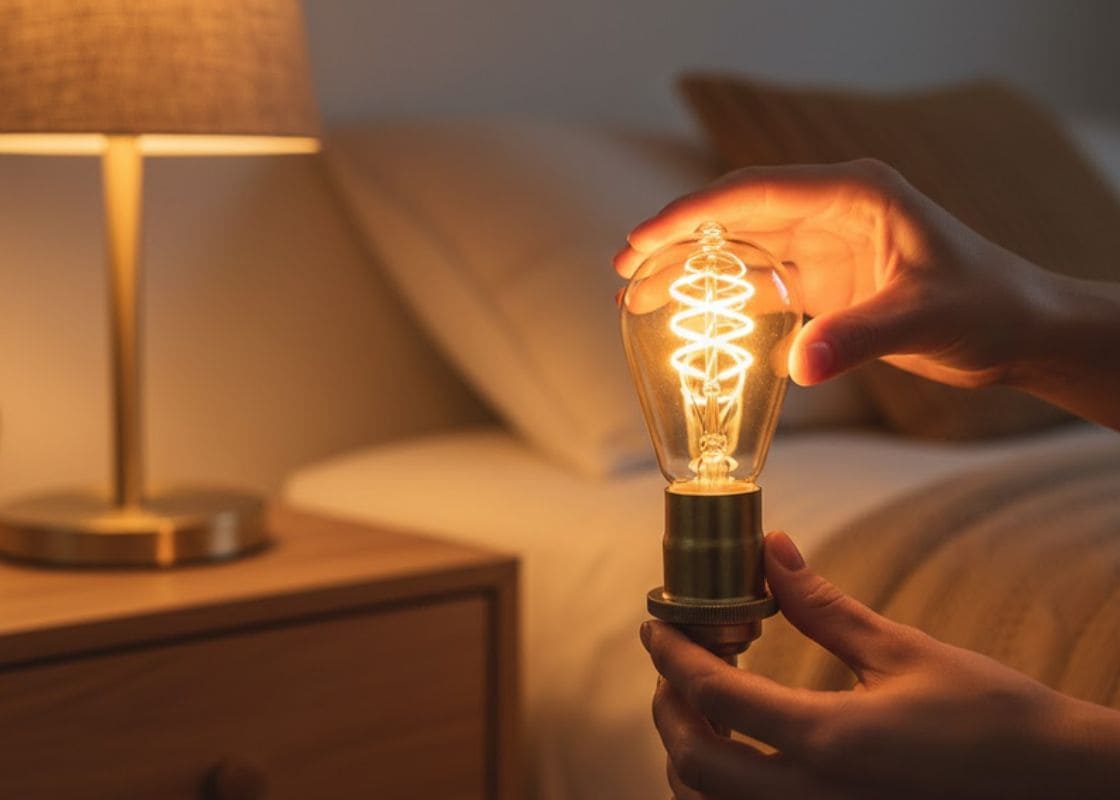
Boston woke up to the first snow today, and the kind of cold that sneaks into your bones even when the windows are shut tight.
I stood in my bedroom with my socks pulled up and my shoulders hunched, and I realized something that surprised me a little: the room felt colder than it actually was.
Not just temperature-cold, but visually cold, like the light itself was doing nothing to comfort me, and once I noticed it, I could not unsee it.
Winter has always made my house feel louder in a quiet way. The daylight disappears earlier, the shadows get sharper, and at night your overhead light can turn even a familiar room into something that feels stark and unfinished.
So today, with snow collecting on the ledges outside, I did the simplest thing that reliably changes the mood of a space without rearranging furniture or buying new bedding.
I swapped out my cool daylight bulbs for warm soft white, and I followed one rule that makes the whole trick work: every lamp in the room needs to match the same warmth.
When the color of the light matches, your space stops looking harsh and mixed, and it starts to feel calm, cohesive, and oddly warmer, even before the heater catches up.
Why Cold Light Makes a Room Feel Colder
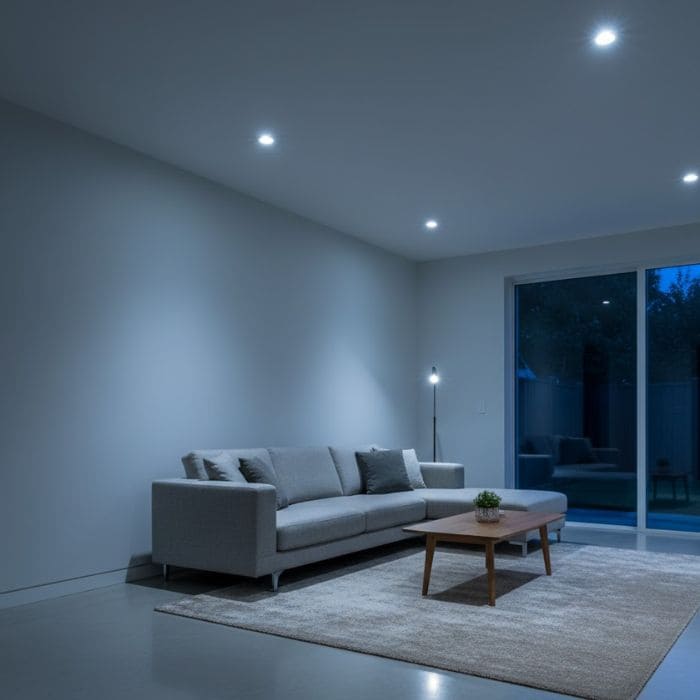
Light has a mood, even when we are not consciously paying attention. Cool daylight bulbs, the ones that look crisp and slightly blue, can be useful in places where you need focus, like a garage, a laundry corner, or a task-heavy workspace.
In a bedroom at night, especially in winter, that same crispness can feel like you are sitting under a spotlight, and the shadows it creates tend to look sharper, more dramatic, and honestly a little unforgiving.
Warm soft white light, on the other hand, makes the edges of a room feel gentler. It smooths out contrast, it makes fabrics look richer, and it makes skin tones look more natural.
It is the difference between a room that feels like you are “in it” and a room that feels like you are being examined inside it, and once you experience the change, it becomes hard to go back.
There is also a practical reason warm light feels comforting in winter: it resembles firelight and candlelight, which our brains tend to interpret as safe, cozy, and restful, especially after sunset.
The One Rule That Makes This Look Expensive
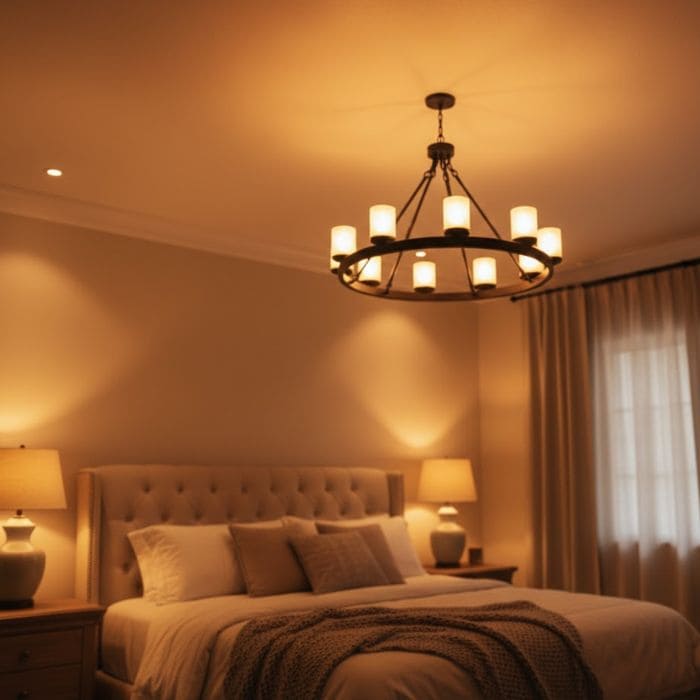
Here is the guideline that matters most, and it is the reason this feels like a makeover instead of a random bulb swap.
If your lamps have different warmth levels, your room will look patchy. One corner will look yellow, one will look blue, and your eye will keep noticing the mismatch even if you cannot explain what feels off.
When every bulb matches the same warmth, the whole space looks intentional, like you planned it, even if the only thing you planned was a quick run to the store and five minutes on a step stool.
So the rule is simple: pick one warmth level for the room, then make every lamp match it.
Warm vs Cool Light, Explained in a Way You Can Actually Use
When you shop for bulbs, you will usually see a number called Kelvin, written as a K.
Warm light sits lower on the Kelvin scale. Cool light sits higher. You do not need to memorize every number, but knowing the general range makes shopping so much easier.
Warm, cozy light is typically around 2200K to 3000K. Most soft white bulbs are around 2700K, and that is my go-to for bedrooms and living rooms because it feels warm without making everything look orange.
Neutral light often lands around 3500K. It is not harsh, but it does not feel particularly cozy either, which can be nice for kitchens if you want a clean look without the icy feel of daylight.
Cool daylight bulbs often sit around 5000K to 6500K. They can look bright and crisp, but they can also make a bedroom feel like a waiting room, especially at night.
If you do nothing else, remember this: for a softer bedroom in winter, aim for soft white around 2700K and keep every lamp consistent.
Brightness Matters More Than People Think
The second thing you will see on bulb boxes is lumens. Lumens are brightness, and this is where a lot of rooms go wrong. Someone buys a warm bulb but it is too bright, so the light still feels aggressive. Or someone buys a very dim bulb, and the room feels gloomy instead of cozy.
Think of it like this: you want warm light that feels like it’s wrapping around the room, not warm light that is shouting.
For most bedside lamps, a gentle range is often around 450 to 800 lumens, depending on your shade and how much light you need for reading.
If you like to read in bed, leaning closer to the higher end feels practical. If your lamp is mostly for ambiance, a lower brightness can feel perfect.
For a bigger bedroom with darker walls or heavy curtains, a bit more brightness helps the warmth actually reach the corners. Warm and dim can be cozy, but warm and too dim can also feel like you are living in a cave, and that is not the goal when winter already feels long.
My Under-$20 Shopping Plan
This trick stays cheap because you usually do not need a new lamp. You need matching bulbs.
I typically buy two or three bulbs at a time so I can swap the whole room at once, and I choose LED because it keeps energy use low and lasts longer, which matters when you rely on lamps a lot in winter.
If you want to keep it simple, look for these words on the box: “soft white,” “warm white,” or a Kelvin number around 2700K. Then choose the brightness that suits your room.
If your lamps use the standard screw base, most bulbs will fit easily. If you have smaller bases or odd fixtures, take a quick photo of the bulb that is currently in the lamp so you can match the size and shape.
Step-by-Step: The Five-Minute Bedroom Reset
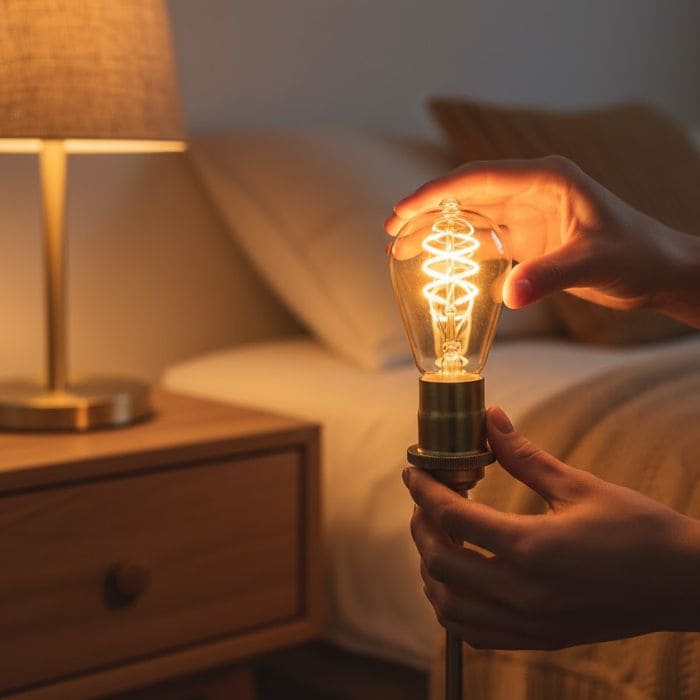
I like making this a tiny ritual, because it feels like caring for yourself in a very practical way.
First, I turn on every light in the room, including bedside lamps and any floor lamp. I stand in the doorway and look around, not for decor, but for color. If one corner looks bluish and the other looks yellow, I already know the room is mixed.
Then I unscrew the daylight bulbs and set them aside. I keep them, because there are times they are useful, and you do not have to throw things away to change your home.
Next, I install warm bulbs in every lamp, and I turn them all on again at the same time. This is the moment you can feel immediately. The room looks softer, the shadows relax, and the space suddenly feels like it is ready for rest.
Finally, I check one last thing: glare. If the bulb is visible and too bright, I swap to a slightly lower lumen bulb or use a shade that diffuses more, because the softest light is almost always filtered.
The Bedroom Sweet Spot: What I Recommend
If you are doing this specifically to make your bedroom feel warmer and softer, this is the simplest target.
Use soft white bulbs around 2700K in your bedside lamps and any floor lamp in the room, then keep overhead lighting off at night as much as you can. Overhead light tends to cast the harshest shadows, and it rarely makes a bedroom feel restful.
If you need overhead light for cleaning or folding laundry, that is completely normal, but for nighttime comfort, lamps are the secret.
Here is a practical hack I swear by: place at least one lamp lower than eye level. Light coming from lower angles feels gentler and more flattering, and it makes the room feel like it’s glowing instead of blazing.
The Mixed Bulb Mistake That Makes Rooms Look Messy
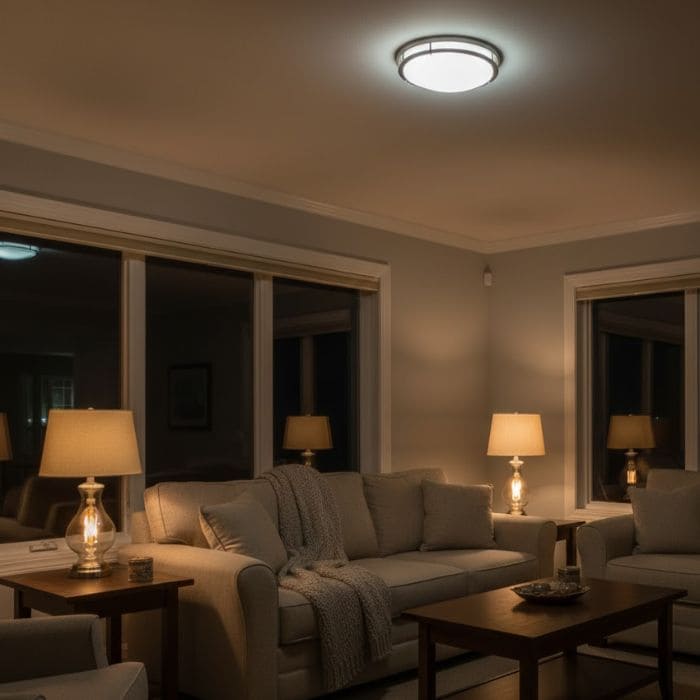
The most common mistake I see is someone using warm bulbs in lamps but leaving a cool bulb in the overhead fixture, then switching between them at night.
That jump is jarring. The room goes from cozy to clinical in one click, and it can make everything feel slightly off, like you cannot settle.
If your overhead fixture is harsh, you can still fix it cheaply. Use a warm bulb in the ceiling fixture too, then choose to keep it off most evenings.