Last week, I was already halfway into bedtime mode when I heard it, a low, blunt thump that didn’t match any of the usual sounds in my house, and for a second I just stood there with my bedroom light on, trying to convince myself it was nothing more than weather or a neighbor’s door closing too hard.
The forecast that day had been full of warnings about heavy rain moving through Boston, the kind that makes the air feel thick and unsettled, so my brain immediately offered thunder as an explanation because it was the easiest answer, the answer that lets you keep moving toward sleep without having to think.
I even walked to the window and cracked it open, expecting the familiar rush of rain on the street or that wet, metallic smell that comes before a storm, but the night outside was strangely still, and the quiet felt too clean for the kind of rain we’d been promised.
That was when my Golden Retriever barked, not the playful bark he uses when he wants attention, but a sharper one that made my stomach tighten because he was looking down the hallway toward the kitchen like something had changed in there, and he needed me to see it too.
The Kitchen Looked Normal Until It Didn’t
At first glance, nothing looked dramatic, especially because the overhead light was off and the kitchen had that soft, shadowed look it gets at night when the counters blend into the walls and the room feels like it’s resting.
My dog walked ahead of me with that cautious confidence he has, then stopped near the sink and held still in a way that felt deliberate, as if he was guarding the line between normal and not normal.
When I switched the light on, what hit me first was something small and oddly unsettling: the cabinet doors under the sink weren’t closed evenly, and one of them sat slightly off, just enough to look like someone had nudged it open.
I stared at that for a beat, because I am the kind of person who notices misalignment faster than I notice chaos, and the little wrong things always feel louder to me than the big obvious ones.
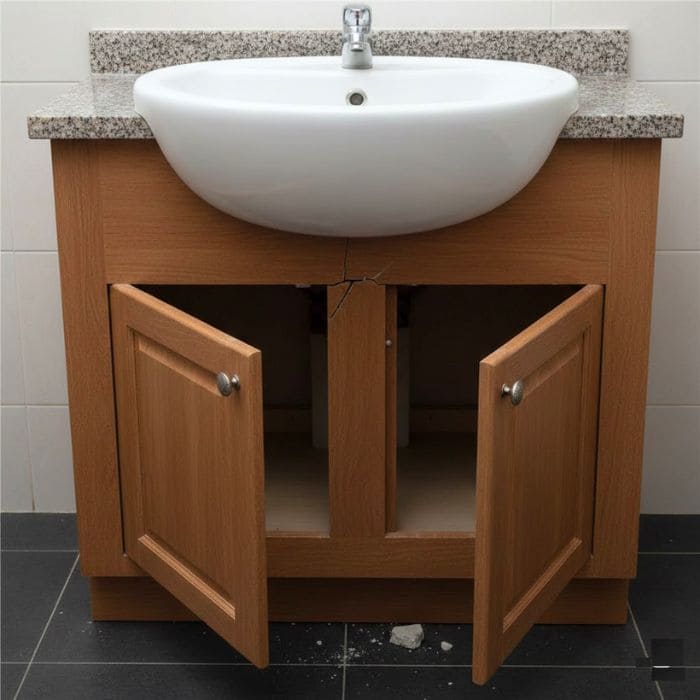
The sink had shifted, not fallen fully out in a dramatic crash, but sagged enough that the front edge sat lower than it should, and the basin looked like it was leaning forward in a tired way, like it had been holding itself up on habit and finally lost the will to pretend.
The countertop was still there, clean and intact, but the relationship between sink and counter had changed, and that is what made it frightening, because it meant something structural had given up without warning.
That thump suddenly had a shape in my mind, and I could picture exactly what had happened: a support loosening, a bracket slipping, weight shifting, gravity doing what it always does when something stops holding.
The Sink I Bought When New Home Meant Fresh Start
I installed this sink a little over seven years ago, back when the kitchen still felt like a place I could improve with a weekend plan and a list written on scrap paper, and I remember the purchase more clearly than I should because it was one of those practical upgrades that made me feel capable at the time.
It was not a designer choice, not a statement sink that needed photographing, but a simple stainless-steel single bowl that was deep enough to hide the mess of dishes when I wasn’t ready to deal with them, which, if I’m honest, was the real reason it appealed to me.
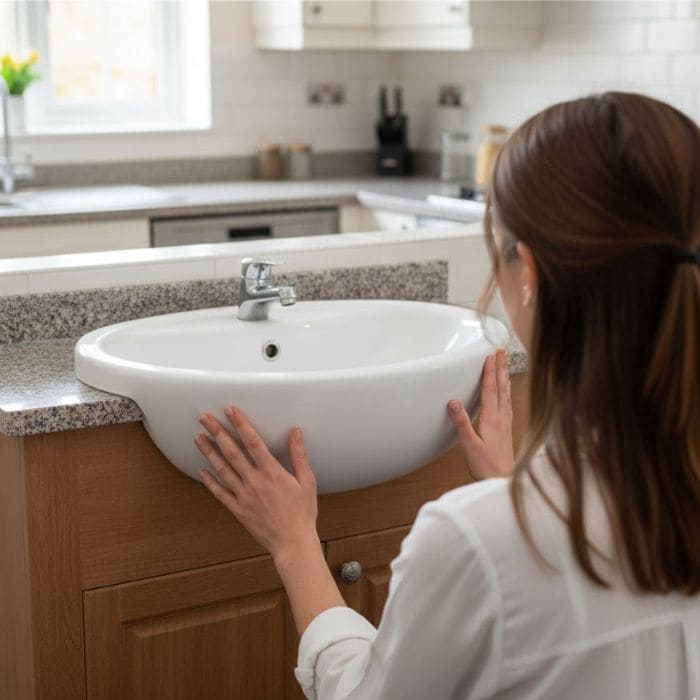
I bought it from a big home improvement store on a Saturday morning, and I remember standing in the aisle comparing finishes like I had a refined opinion, even though what I really wanted was something that wouldn’t show every fingerprint and water spot, because I already knew I wasn’t someone who wanted to polish a sink as a hobby.
I chose a brushed finish because it looked forgiving, and I chose a single bowl because I wanted room to wash a sheet pan without angling it like a puzzle piece.
At the time, it felt like the kind of purchase you make when you believe stability is something you can build with enough sensible decisions, and I remember thinking, with ridiculous confidence, that a sink is one of those things that lasts forever if you pick the right one.
Seven years is not forever, apparently, especially in a kitchen where life happens and humidity collects and tiny vibrations from daily use add up, quietly, until they don’t feel quiet anymore.
The Small Problems I Filed Under Later Because I Was Tired
Standing there in the bright kitchen light, I started replaying the last few months in reverse, and I realized how many small signs I had noticed without really honoring them, because that is what you do when you’re managing life with a limited amount of energy.
There had been a faint wobble in the faucet base when I turned it quickly, the kind that makes you think you just need to tighten something, then you don’t because it still works and you tell yourself you’ll do it on the weekend.
There had been a tired-looking caulk line along the back edge that wasn’t smooth anymore, just slightly cracked and uneven, like it had shrunk away from its job, and I had looked at it more than once with the vague thought that it should probably be redone.
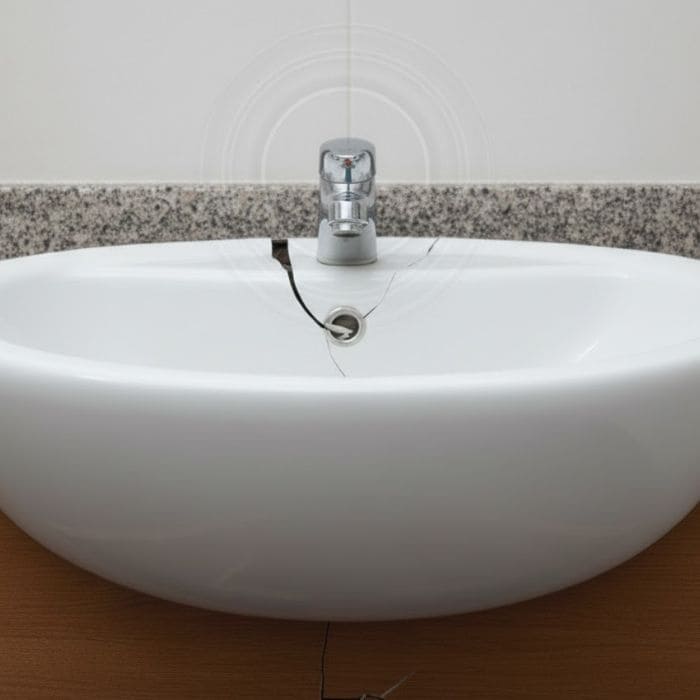
Every now and then, when I leaned forward to scrub a heavy pot, I’d hear a soft creak that I blamed on the cabinet wood shifting with the seasons, because blaming the seasons is a comforting habit, and it lets you believe the house is simply alive, not failing.
The most telling sign was the smell inside the cabinet under the sink, which never quite smelled dry, even when it looked dry, and if you’ve ever opened a cabinet and caught that slightly damp, slightly old scent, you know how easy it is to convince yourself it’s cleaning supplies or a forgotten sponge, because naming it as water is a heavier thought.
I wiped it down, I reorganized bottles, I threw away an old rag, and I told myself that was enough.
Opening the Cabinet Made It Real
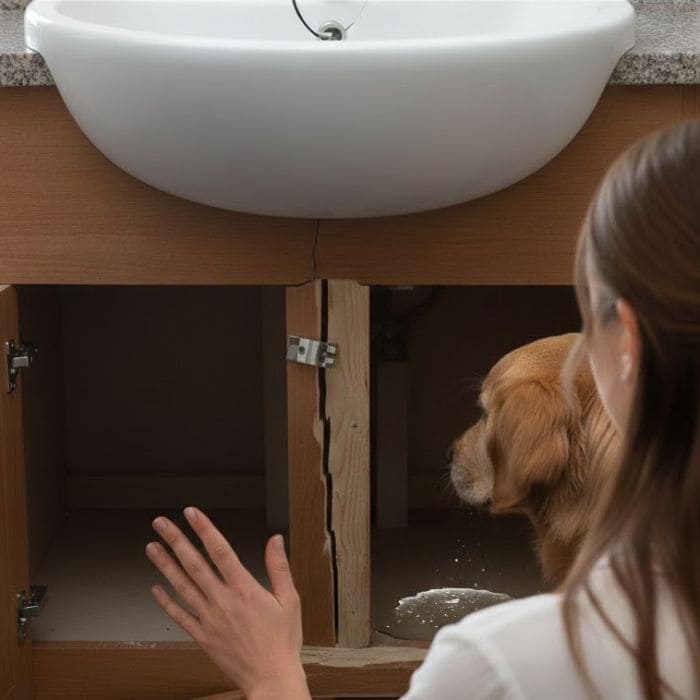
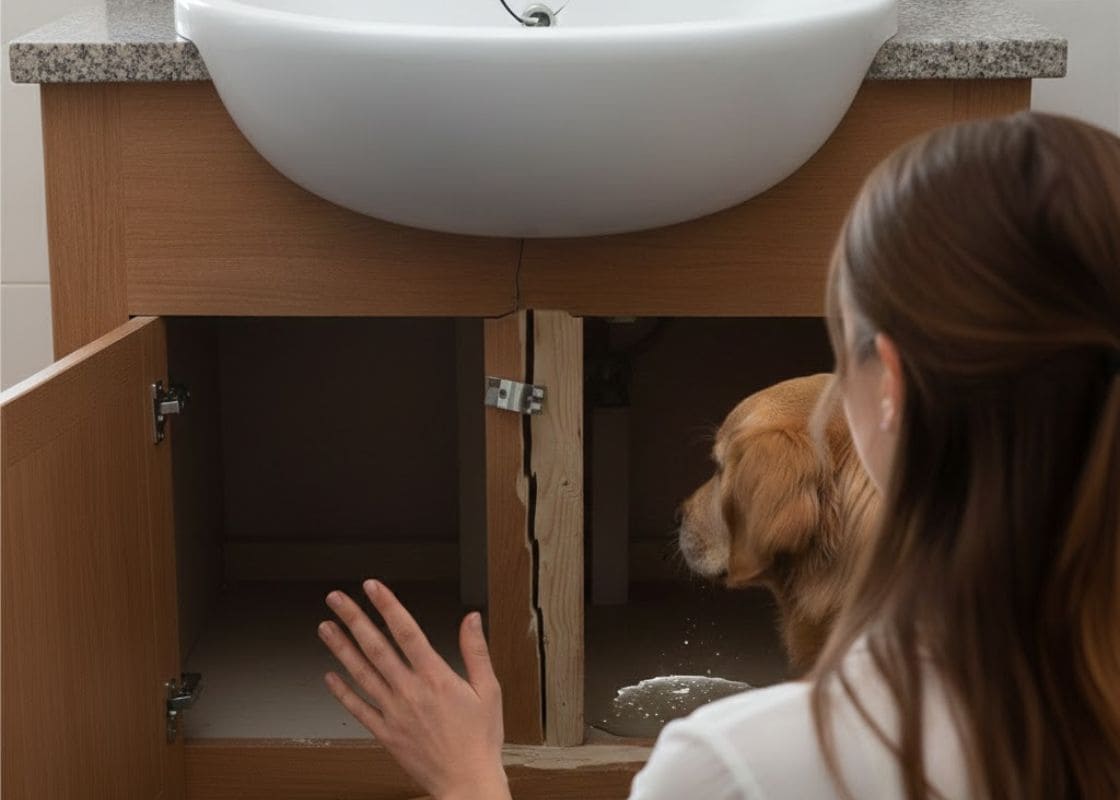
I crouched down and opened the cabinet doors slowly, as if the sink might drop further if I moved too fast, which is not logical but is exactly how your body behaves when it senses a tipping point.
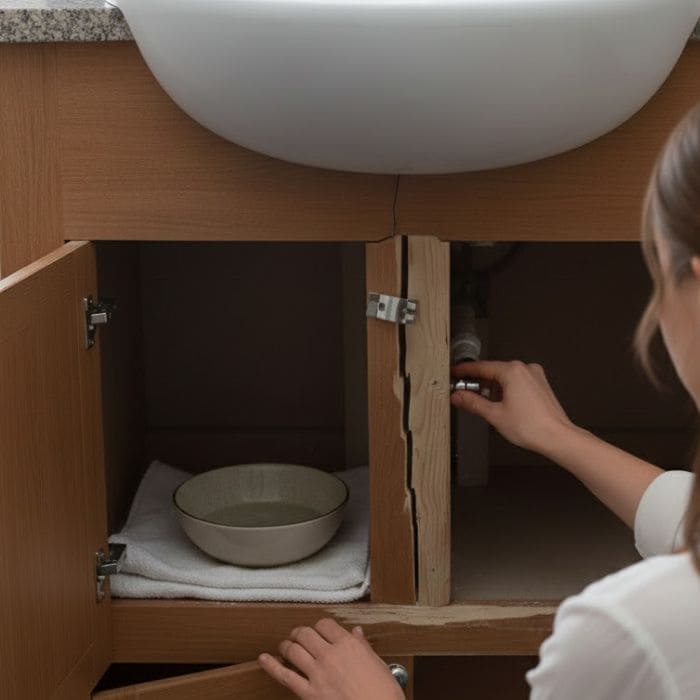
Inside, the support situation looked wrong in a way I could recognize even without being an expert, because one of the wooden braces had split, and a metal clip that should have been snug looked slightly shifted, as if it had slipped out of its proper place and never returned.
There was a small puddle on the cabinet floor, not an emergency flood, but enough water to glisten and catch the light, enough to tell me this wasn’t only cosmetic, and the smell of damp wood was suddenly obvious, sharp in a way that made me feel foolish for ignoring it earlier.
My dog leaned in, sniffed once, then looked up at me, ears forward, and I felt that odd comfort I always feel in those moments, the comfort of not being alone in the house when something goes wrong, even if the companion you have is furry and cannot hold a wrench.
What I Did Instead of Fixing It at Midnight
This is where people expect the heroic part, the part where I roll up my sleeves and start troubleshooting, but real life rarely looks like that, especially at the end of a day when your brain is already running on fumes.
I did the most important thing first, the thing that protects you from waking up to a bigger disaster, which is turning off the water valves under the sink, and I did it carefully, slowly, checking that they fully closed because I didn’t trust the situation to behave.
Then I placed a towel and a bowl under the pipes, not because I thought it was going to pour, but because I needed to feel like I had done something to contain it, like I had drawn a boundary around the problem so it could not spread while I slept.
In the end, I didn’t pretend, but I also didn’t launch into a late-night repair attempt, because I know myself, and I know that tired fixes often become bigger problems. I texted my fixer, the one I trust, and I kept it simple: sink shifted, support looks broken, water shut off, can you come tomorrow.
Of course I went to sleep after that, waited for the fixer and I would update the state of my sink in the next blog.