For a long time, my home carried a quiet that felt both peaceful and a little too empty, the kind of quiet where you start noticing the refrigerator hum, the ticking clock, and the soft tap of your dog’s paws following you from room to room as if he’s making sure you’re still here.
Most days it was just me and my Golden Retriever, and I learned how to live inside that rhythm, even when the evenings felt long and the rooms felt bigger than they needed to be for one person.
Over the past few weeks, friends have been stopping by more often, and even a few neighbors have paid visits when they saw me at home or noticed my car in the driveway.
Whenever someone visits, I almost always end up cooking, because cooking is the quickest way I know to make a house feel held together, and there’s something about the smell of something warm on the stove that makes even an ordinary afternoon feel softer.
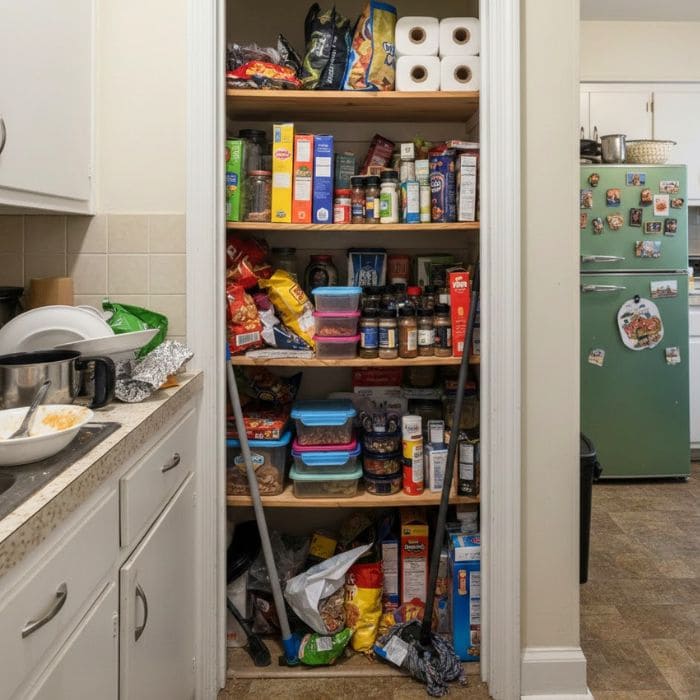
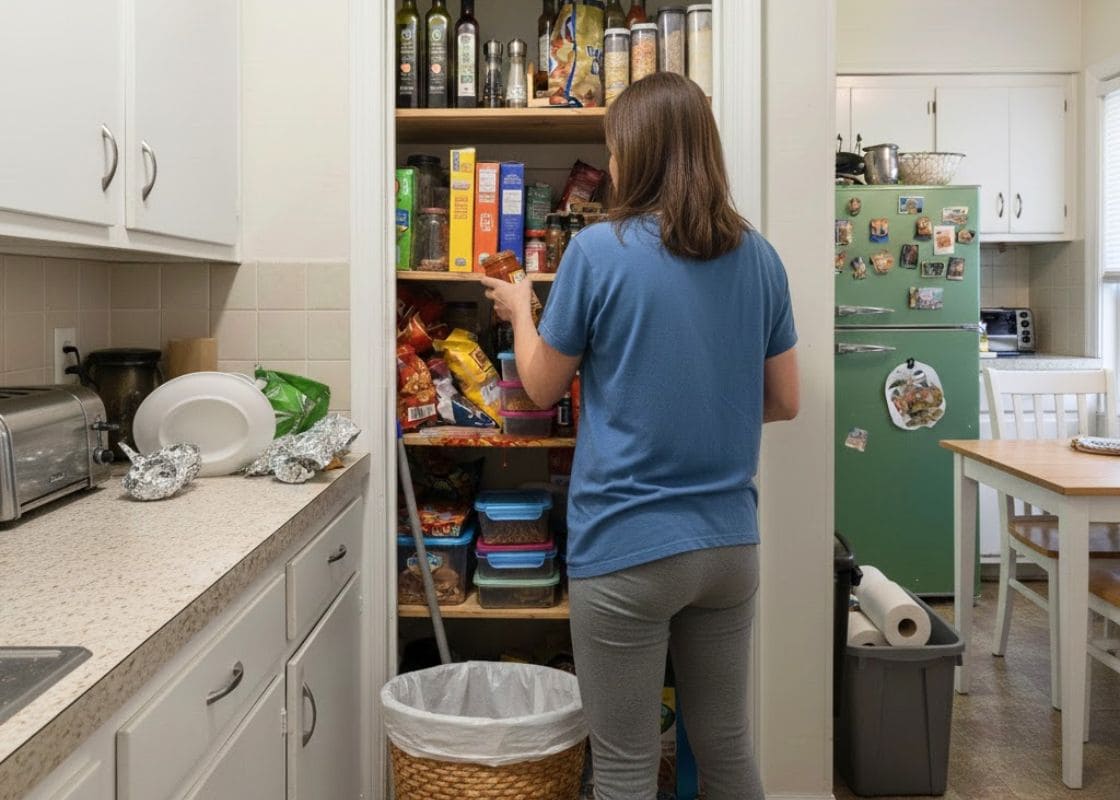
That’s exactly why the first thing I want to work on is my pantry, because my pantry is small, slightly chaotic, and honestly built for the version of me who was mostly cooking for one, grabbing things quickly, closing the door, and not caring if the shelves looked messy as long as the food existed somewhere behind them.
Now that I’m cooking more often, the pantry has started to feel like a daily friction point, because I’ll open it and immediately feel mildly irritated when I can’t see what I have, and then I’ll waste time searching for things I know I bought, which is not the energy I want when I’m trying to make the kitchen feel warm and relaxed.
Why a Small Pantry Can Make the Whole Kitchen Feel Harder
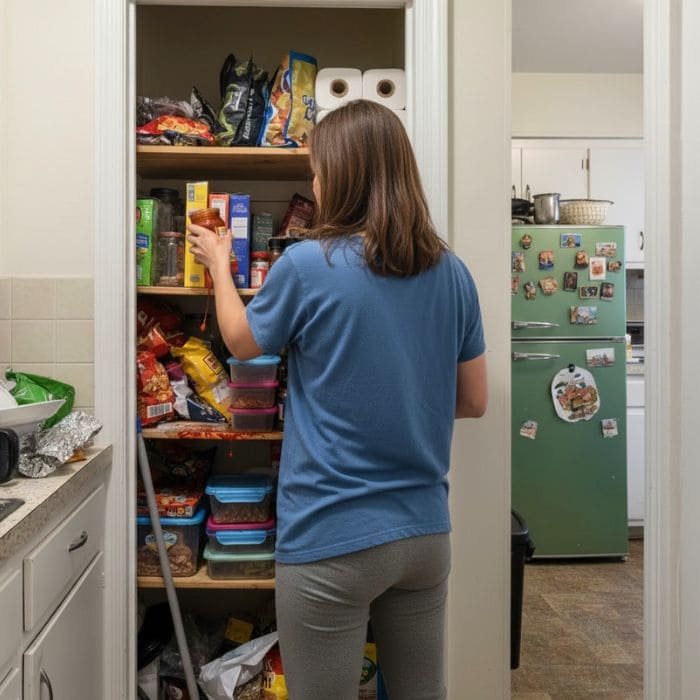
A small pantry doesn’t just limit space, it limits clarity, and clarity is what makes cooking feel calm.
When shelves are deep, items disappear to the back and quietly expire, and when categories aren’t clear, you buy duplicates because you can’t remember what you already have, which somehow makes the pantry look fuller while still feeling like you have nothing.
Over time, the pantry becomes a place you avoid because it stresses you out, and you start leaving things on the counter instead because the counter feels easier than the pantry door, and then the kitchen starts looking cluttered even when you’re trying your best.
What I want is not more storage, but better access, because in a small pantry, the ability to reach and see what you have matters more than how many inches of shelf you technically own.
The Real Size of My Pantry and the Problem It Creates
My pantry is roughly 30 inches wide, about 18 inches deep, and close to 7 feet tall, which means it has just enough room to be useful but also enough depth to hide things from me like it’s playing a small game.
The depth is the biggest issue, because 18 inches is not huge, but it’s plenty for items to get pushed behind other items, especially when I’m putting groceries away quickly or I’m tired.
That’s how I end up with half-open bags of rice in the back and three different boxes of pasta in the front, all while I’m still convinced I need groceries.
So the plan isn’t to cram more into the pantry, because that would only increase the chaos, but to set it up so the pantry works like a clear, simple tool that helps me cook without friction.
My Pantry Remodel Plan That Works in a Small Space
I’m not tearing anything out or making it complicated, because I know myself well enough to understand that the systems that last are the ones that are easy to maintain on tired days, and I want this pantry to hold up when life is busy, not only when I’m motivated.
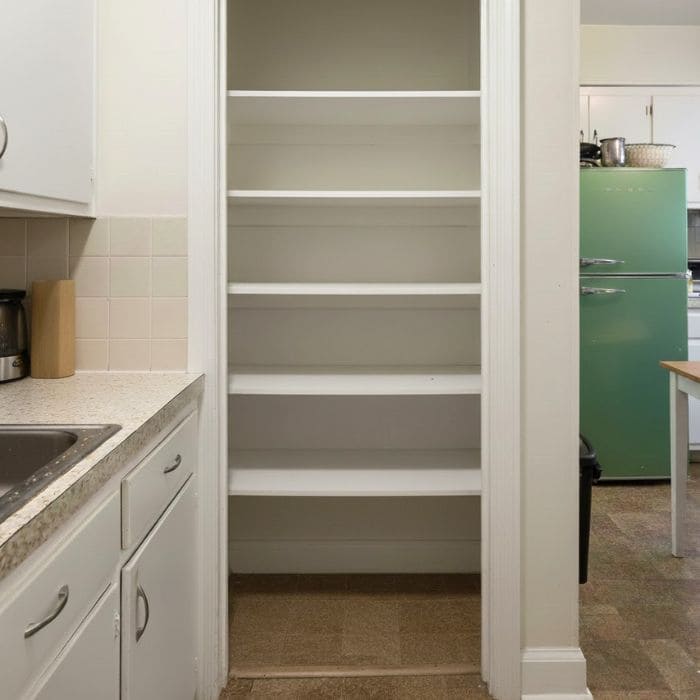
First, I’m emptying everything completely, wiping shelves down, and taking a real inventory, because it’s impossible to organize what you won’t look at honestly, and I always find duplicates when I do this, which immediately makes the pantry feel less crowded.
While it’s empty, I’m measuring the exact shelf depth and spacing so any bins I use actually fit, because the fastest way to waste money is buying containers that look right online but don’t suit the space you have.
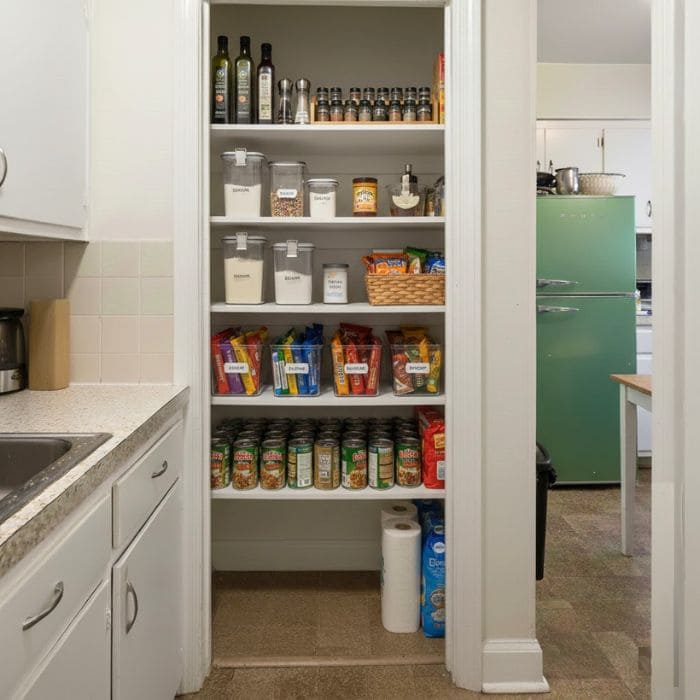
Then I’m building categories based on how I actually cook now, not how I imagine a perfect pantry should look, because my goal is function and calm, not perfection.
I’m grouping everyday cooking staples together, like oils, vinegars, salt, and my most-used spices, because those are the items I reach for constantly, and I want them in one easy zone.
I’m creating a baking section for flour, sugar, baking powder, and the little baking add-ins that always get lost, because baking is the kind of thing I do when I want the house to feel cozy, and I don’t want it to feel like a scavenger hunt.
I’m also making a snack zone, because visitors seem to create snack needs faster than I expect, and having snacks visible and contained keeps the kitchen from feeling messy.
Then I’ll have a clear section for canned goods and jars, and finally a backstock area for extras, because the key difference between helpful backstock and chaotic backstock is having a designated space for it.
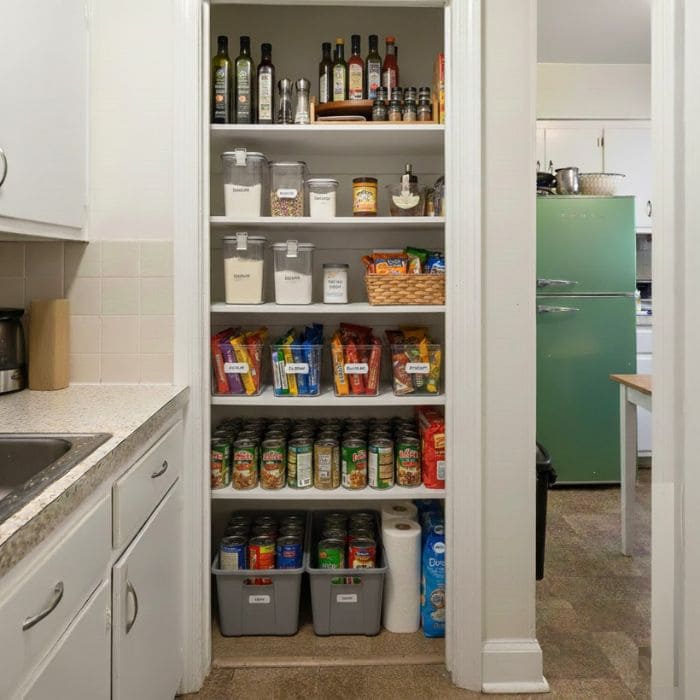
The biggest upgrade, though, will be pull-out bins, because bins are what turn deep shelves into usable shelves, and in a small pantry that matters more than almost anything else.
When snacks and baking supplies live in bins, I can pull the whole category out in one motion, see everything at once, and put it back without rearranging the shelf, which is exactly the kind of small ease that makes me cook more willingly.
I’m also adding one lazy Susan for bottles, because oils and sauces are always the items that topple and crowd, and a turntable lets me spin and grab what I need without knocking everything over.
On the bottom shelf, I’m using two shallow bins for heavy items, one for cans and one for bulk items, because shallow bins prevent me from creating a single heavy box that I’ll dread lifting, and anything I dread lifting becomes something I avoid, which is how organization dies.
The Small Habits That Keep It From Falling Apart Again
I’m also setting a few gentle habits, because a pantry doesn’t stay organized because you organized it once, it stays organized because you maintain it in small ways that don’t feel dramatic.
I’m keeping one use this next basket at eye level so open bags and almost-empty boxes have a place to go, and I’m committing to clipping or containering anything that’s opened, because torn bags are the number one cause of pantry mess in my house.
Once a week, I’ll do a five-minute reset where I simply put things back into their bins and wipe crumbs before they become a problem, because five minutes is easy enough to do, and anything that feels easy is something I’ll actually repeat.
Why This Pantry Remodel Feels Like More Than a Pantry
I didn’t expect a pantry to feel emotional, but it does, because it’s connected to the way my home has started feeling again.
When my house was quieter, I cooked like I was completing a task, quick meals, minimal mess, no extra steps.
Now I’m cooking like I’m trying to create warmth, because warmth is what makes a home feel like a home when people stop by, when conversation happens at the counter, when someone sits at the table and you want them to feel comfortable.