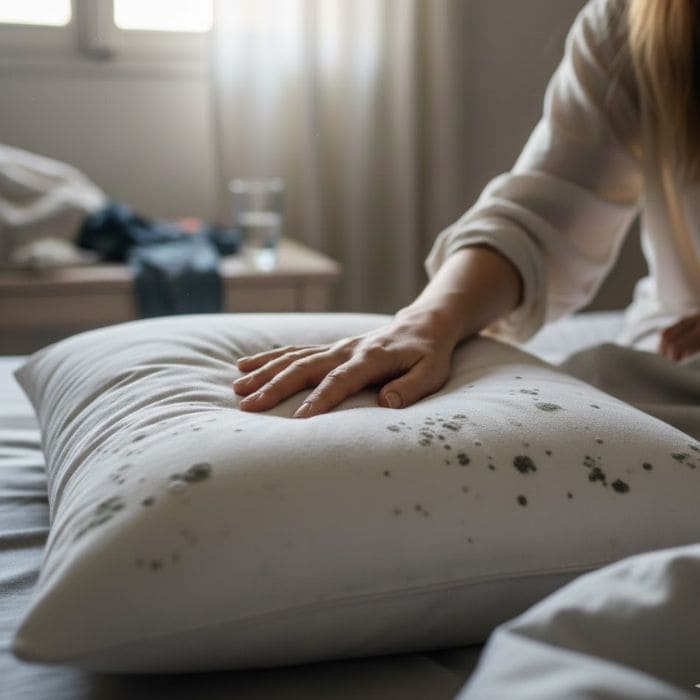
Two days ago, I stripped the bed the way I always do and found something that made my stomach drop for a second: a small patch of mold spotting on one of my pillows, right near the seam where fabric folds and air never really circulates.
My first instinct was embarrassment, which is honestly such an annoying human reaction, because I keep a clean home, I shower, I wash my hair, and I do not go to bed with oily product slicked into my scalp like I’m marinating overnight.
Still, there it was, and I stood there in my bedroom trying to figure out what I had done wrong, while my Golden Retriever watched me like he could tell I was about to start an unnecessary spiral.
What helped me calm down was remembering the blunt truth that the EPA repeats for a reason: mold control is moisture control, and the problem is rarely dirt, it is trapped dampness that sits long enough to become a welcome mat for growth.
That sentence is not comforting, but it is clarifying, because it turns this into a fixable home systems issue instead of a personal failure.
Why Mold Can Show Up on a Pillow in a Clean Bedroom
A pillow is exposed to moisture every night, even when you feel “dry,” because your body releases heat and humidity while you sleep, and your pillow sits in a spot where air tends to stay still.
In winter, especially in Boston-style cold, homes get sealed up, heat runs more often, and humidity can swing in sneaky ways, because you might have condensation at a window or along an exterior wall, then dry heat blasts and creates a cycle where fabrics repeatedly absorb and release moisture.
For some people, it is as simple as going to bed with hair that feels mostly dry but is still damp at the roots, or using a humidifier set a little too enthusiastically, or washing a pillow and not drying it all the way through, which is a bigger deal than it sounds because pillows can feel dry on the outside while staying damp in the center for hours.
The First Decision I Made: Clean It or Replace It
I only tried to save my pillow because the spots were small, the smell was normal, and the pillow was a type that can be washed and fully dried.
If the mold had been widespread, if the pillow had stayed musty after a full day of airing out, or if it looked like the staining was coming from inside the filling rather than sitting on the outer fabric, I would have replaced it without debating myself, because porous materials can hold mold in places you cannot reach.
Foam pillows are the category where I get extra strict, not because they are bad, but because foam holds water and dries slowly, and if you cannot dry something quickly and completely all the way through, you can end up feeding the same problem again.
Safety Setup I Followed Before Touching Anything

I did not shake the pillow, and I did not fluff it to “see how bad it was,” because the goal is to avoid putting spores into the air.
I opened a window for fresh airflow and wore gloves, and I kept cleaning products simple, because the CDC specifically warns never to mix bleach with ammonia or any other cleanser, and it also recommends opening windows and doors while using cleaning products.
I also want to say this plainly, because social media is full of chaotic cleaning advice: I did not mix random products together, and I did not make a DIY cocktail, because that is how people end up with dangerous fumes instead of a clean pillow.
Step 1: Identify Your Pillow Type Before You Wash It
This is the pivot point for the entire routine, and it is worth taking one minute to check the label.
- If your pillow is polyester fill, down alternative, cotton fill, or down and feathers that are labeled washable, you can usually do a full wash-and-dry routine safely.
- If your pillow is solid memory foam, latex foam, or a specialty foam, you should not soak it or throw it into a washer, because water trapped inside foam is exactly the kind of hidden moisture mold loves.
If you cannot find a label, I treat it as foam until proven otherwise, because being gentle is better than ruining a pillow and making a bigger mess.
Step 2: My Exact Routine for Washable Pillows
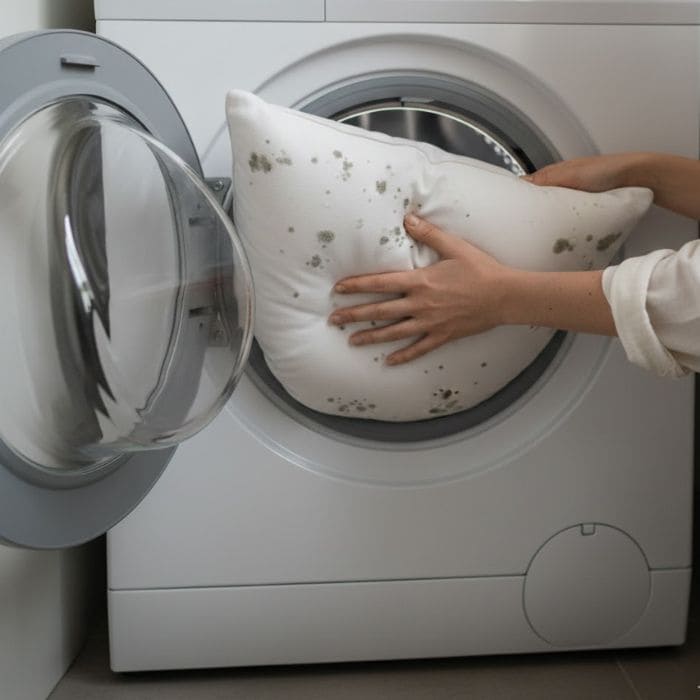
I started by taking the pillow straight to the laundry area without hugging it to my chest like a teddy bear, and I avoided carrying it through the bedroom uncovered.
I gently wiped the surface with a damp cloth and a small amount of detergent, focusing on lifting what was visible without aggressive scrubbing, because the CDC’s basic mold cleanup guidance emphasizes cleaning with detergent or bleach as appropriate and keeping good ventilation.
Then I washed it in the machine using detergent, and I chose the hottest water setting the care label would allow, because heat helps with sanitation and allergen control, and it is also a practical way to make bedding feel truly refreshed.
For allergen reduction, the American Academy of Allergy, Asthma and Immunology recommends washing bedding in hot water around 130°F and drying in a hot dryer.
I do not force 130°F on materials that cannot handle it, but when a pillow label allows hot water, it is a helpful standard to aim for.
I also ran an extra rinse, because detergent residue can hold moisture and odor in thick fabric, and I wanted the pillow to come out as clean and neutral as possible before drying.
The stain help I used, and why I avoided chlorine bleach on fabric
For light staining, I used oxygen bleach as an additive, because it is generally gentler on fabrics than chlorine bleach, and my goal was to clean thoroughly without damaging the pillow casing.
I did not use chlorine bleach on the pillow fabric because it can discolor, weaken fibers, and it is unnecessary for many small mold spots when detergent, hot water, and thorough drying are done correctly.
If someone chooses bleach for a hard-surface mold job, the CDC’s guidance includes a ratio of no more than 1 cup of bleach per gallon of water, along with strong warnings about ventilation and never mixing bleach with other cleaners.
I mention that only so you know what safe and specific looks like, because vague bleach advice is how accidents happen.
Step 3: Drying Was the Part I Took Most Seriously
If there is one part that actually decides success, it is drying, because mold comes back when dampness stays trapped.
I dried the pillow on a hot setting and then gave it additional time beyond what felt “done,” because pillows lie. They can feel warm and dry on the outside while still being damp in the middle, especially at the thickest part of the fill.
After the dryer cycle, I did a simple reality check by pressing the pillow firmly at the center and holding it there for a few seconds.
If it felt cool, dense, or slightly clammy in the core, I ran another drying cycle, because almost dry is how you end up right back here in a week, frustrated and confused.
If Your Pillow Is Memory Foam or Latex Foam
Foam is a different situation, and I want to be honest about that because it saves time and prevents repeat problems.
With foam, you should avoid soaking and machine washing because water can get inside and stay there, and if mold has already started, that trapped moisture becomes a loop.
In this case, a safer approach is gentle surface spot-cleaning with mild detergent on a cloth, then aggressive drying with airflow, such as placing it in a well-ventilated area, using a fan, and giving it real time to dry through.
If a foam pillow smells musty or the spotting returns, it is often wiser to replace it, because porous materials can be difficult to clean completely once mold penetrates beyond the surface.
What I Checked in My Bedroom Afterward
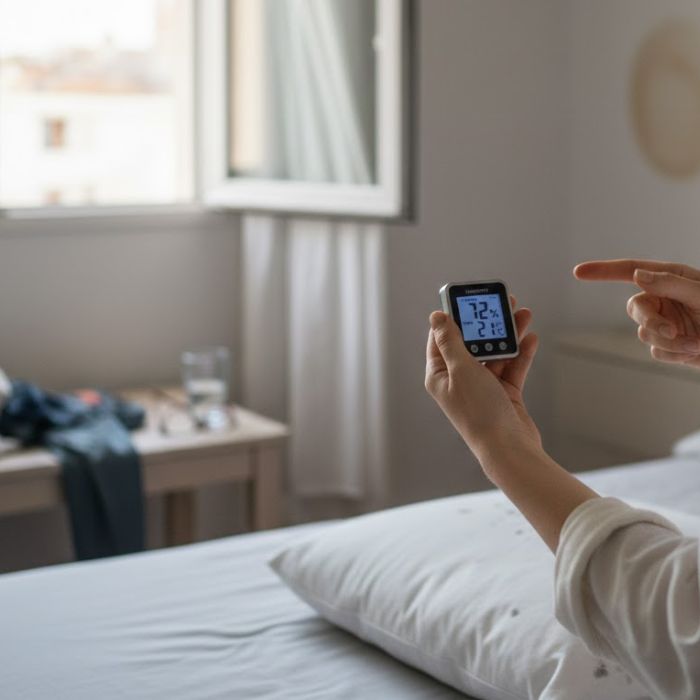
After I handled the pillow, I looked for the moisture source, because cleaning a pillow is only half the story if the room is quietly feeding the problem.
I checked the wall behind my bed and the nearby window for condensation, because exterior walls can run colder in winter, and trapped moisture can settle where the bed blocks airflow.
I also thought honestly about habits that sound harmless but add humidity, like drying hair late at night, running a humidifier, or pushing the bed tight against a wall with no breathing room.
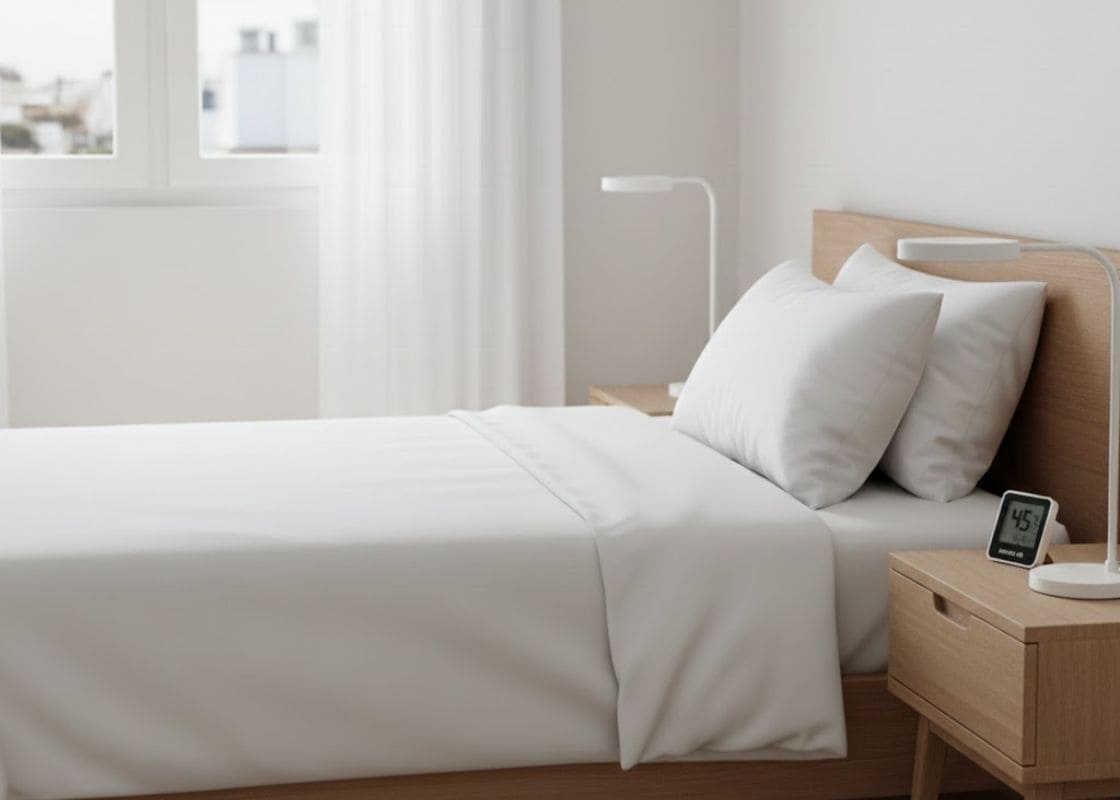
Then I did the most useful grown-up thing I can recommend for this: I paid attention to humidity. The AAAAI advises keeping humidity low as part of managing indoor allergens, and in real home terms that usually means aiming for a comfortable middle zone rather than letting the room feel damp or heavy.
A small hygrometer is inexpensive, and it turns guessing into actual information, which is surprisingly calming.
How I’m Preventing Mold From Coming Back
I changed a few things that are easy enough to keep doing without turning my life into a maintenance schedule.
I started using a zippered pillow protector, because it creates a washable barrier that protects the pillow’s interior fill, and it also makes laundry simpler because you can wash the protector more frequently without constantly washing the entire pillow.
I also stopped letting pillows sit pressed against the coldest part of the wall, because airflow matters more than people think, and I make sure any pillow that goes through the washer goes through the dryer long enough to be genuinely dry in the center, not just warm on the outside.
Finally, I keep an eye on moisture habits, like going to bed with even slightly damp hair, because that one detail can be enough to tip a pillow seam into a damp microclimate over time.