Do you still remember my bedroom, the one that has always felt like the most private room in the house, partly because it holds so many quiet routines and partly because it carries the kind of memories you do not decorate away?
On the floor, I’ve had a large carpet for years, and for a long time I thought it was doing something almost protective for me, as if it was keeping the bedroom cleaner, softer, safer, and calmer in the way thick rugs always promise.
Back when my husband was living, I held onto that belief even more strongly, because health changes the way you look at your home, and I genuinely thought the carpet was helping by keeping dust down and making the room feel more controlled and comfortable.
But recently, I’ve been seeing something I can’t unsee, and once you notice it, the rug stops feeling like comfort and starts feeling like a question.
The Carpet Was Beautiful, and I Still Mean That
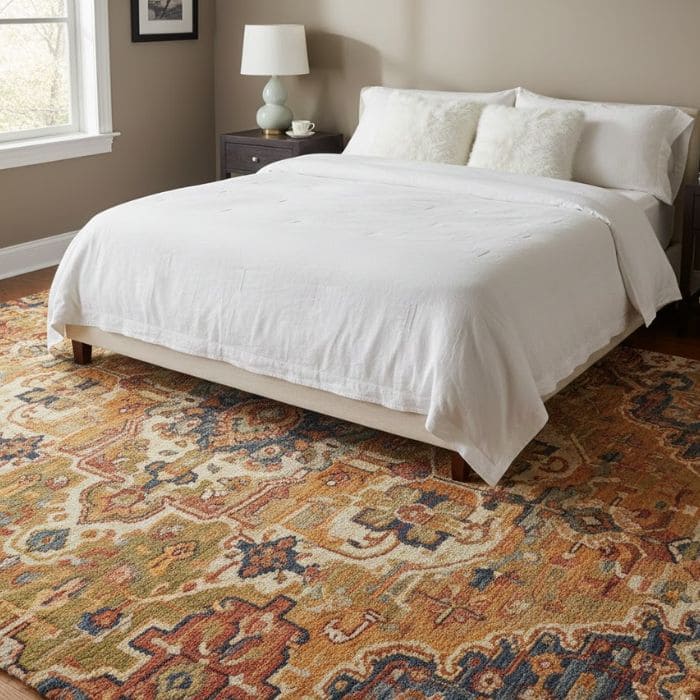
I bought this carpet more than six years ago, and it was not an impulsive purchase. It was one of those “we’ll buy it once, and we’ll buy it well” choices, because the materials were good, the texture was thick and dense, and the seller explained that it was made by hand, not mass-produced.
I remember the way the rug felt when I ran my hand over it in the shop, the slightly springy pile, the weight of it when we lifted a corner, the way the pattern looked rich without being loud, which is harder to find than people realize.
It was expensive in the way handmade pieces often are, and even now, after years of use, I still appreciate it, because quality shows up in the way something holds up, not just in the way it photographs.
The rug itself is large enough that it anchors the bed and the walking area around it, the kind of size you buy when you want the room to feel finished rather than like you dropped a small rectangle in the middle and hoped for the best.
The colors are warm and grounding, with a pattern that hides everyday life better than a flat solid would, and in the beginning I loved how it made the bedroom feel instantly more “settled,” like the room had a foundation.
The Belief I Had, and the Reality I Slowly Saw
When my husband was living, I was always thinking about air, dust, and the invisible things, the stuff that doesn’t announce itself until it does.
At the time, the carpet felt like a smart choice, because I assumed it kept dust from floating around the room, almost like it was trapping it in a helpful way, and that sounded like protection.
The bedroom felt warmer, quieter, and more comfortable, and I told myself that a calmer space was part of taking care of him, and honestly, it probably was, in the emotional sense.
What I didn’t fully account for is that trapping dust is only helpful if you remove it consistently and completely, and thick rugs are very good at holding onto what you cannot see.
Over time, you can vacuum the surface and still have dust, skin flakes, pollen, and tiny debris sitting deeper down in the pile and backing, especially if the rug is dense and heavy and you don’t regularly lift it, deep clean it, and let the underside breathe.
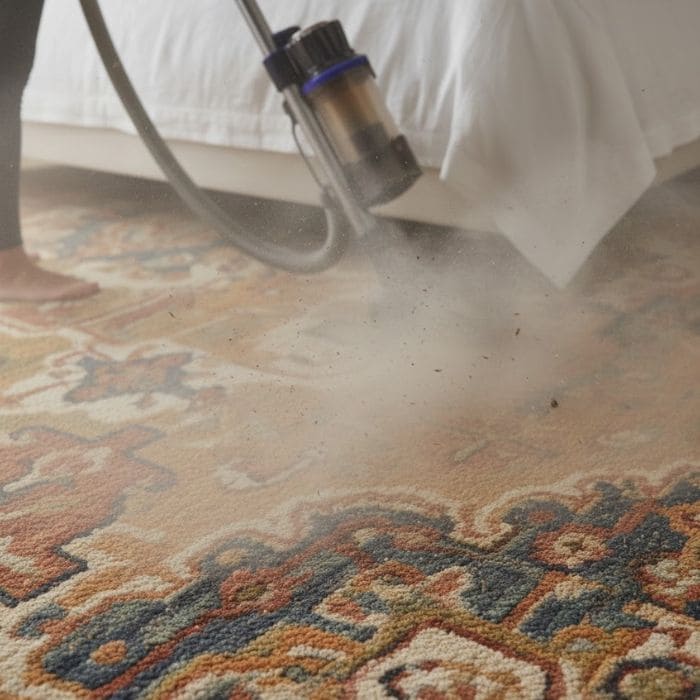
There were mornings when the light hit the bedroom in a certain way and I could see a faint haze moving if I stepped too quickly. There were days when I vacuumed and still didn’t feel like the room felt fresh.
There was the quiet reality of how much my dog sheds, even when he’s clean and brushed, because dogs are lovely and also basically walking fluff factories.
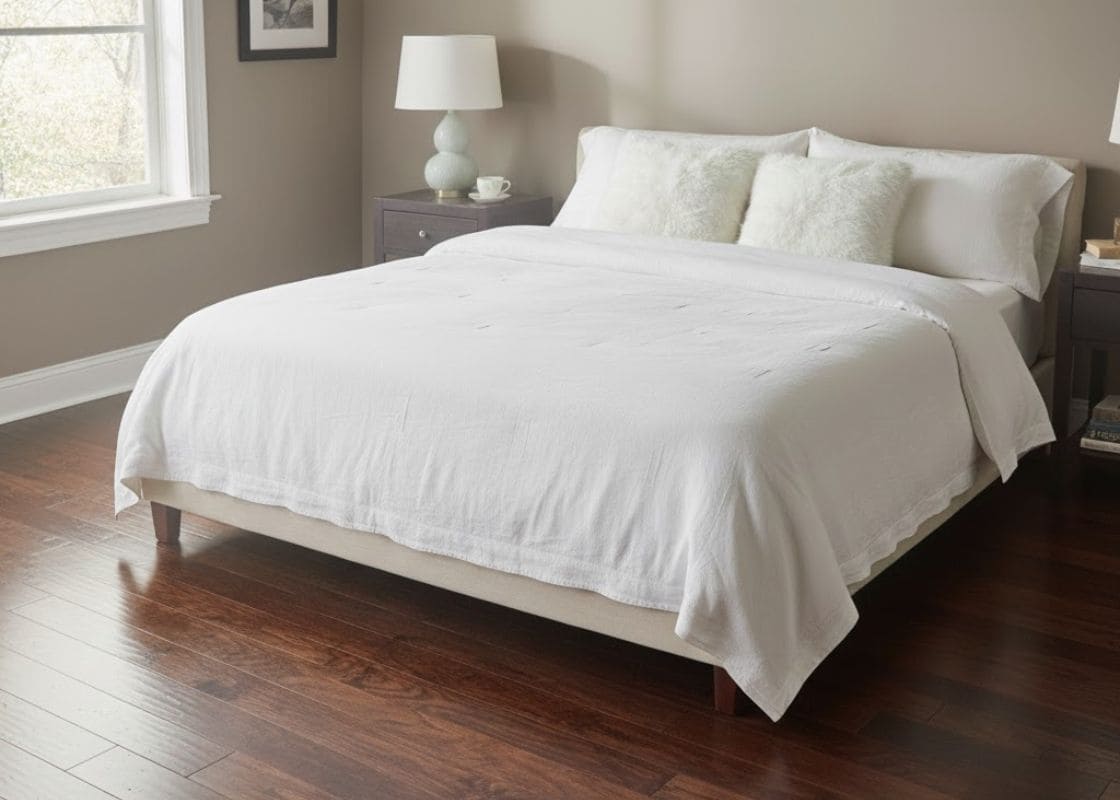
Then, more recently, I visited another home, and the air felt different in a way I didn’t expect, sharper, cleaner, less heavy, and the floors were simple stained wood with a few smaller rugs placed thoughtfully, nothing wall-to-wall, nothing that tried to swallow the whole room.
I went home and stood in my bedroom and thought, I love this rug, but I’m not sure it’s serving the life I’m living now.
The Moment I Knew It Was Time
One afternoon, I did what I call the sunbeam test, because I had heard about it and finally tried it. I opened the curtains, let a strong beam of daylight fall across the rug, and then I gave the rug a firm pat with my hand, not aggressively, just enough to disturb the surface.
The amount of fine dust that lifted in the sunlight made my chest tighten, not because it was horrifying, but because it was honest.
It was proof that the rug was holding more than I wanted to admit, and it was proof that my vacuuming routine, even when I was consistent, wasn’t doing enough to fully clear what had settled deep inside.
Why Wood Floors Started Calling Me Back
I’ve noticed a shift lately, not just in one home I visited, but in the way people are returning to simpler floors again, letting wood show, staining it beautifully, and using smaller rugs as accents instead of using one large textile to cover and soften everything.
Wood feels traditional, yes, but it also feels practical. You can vacuum and actually know you got the dust. You can wipe. You can see where the dog tracked in grit. You can address it immediately, instead of wondering what’s sitting deeper down.
The other part is emotional. When you’re rebuilding your home life after loss, you start craving spaces that feel lighter and easier to reset.
Rugs are cozy, but they can also feel like they hold onto the past, literally and figuratively, and lately I’ve been craving a bedroom that feels like it can breathe.
What I’m Doing With the Rug, Because I’m Not Tossing It Carelessly
I’m not throwing this rug away like it meant nothing, because it did mean something. It was part of our home when my husband was here, and it was part of my home when I was learning how to be alone in it, and I treat those pieces with care, even when I’m ready to change.
So my plan is to have it professionally cleaned first, because if I’m going to store it, gift it, or pass it on, I want it to be fresh, not carrying six years of hidden dust into someone else’s life.
After that, I’ll decide the kindest next step, which might be storing it safely in a breathable wrap, or offering it to a family member who would love it, or donating it somewhere that treats good textiles with respect.
The Practical Plan for Going Back to Stained Wood
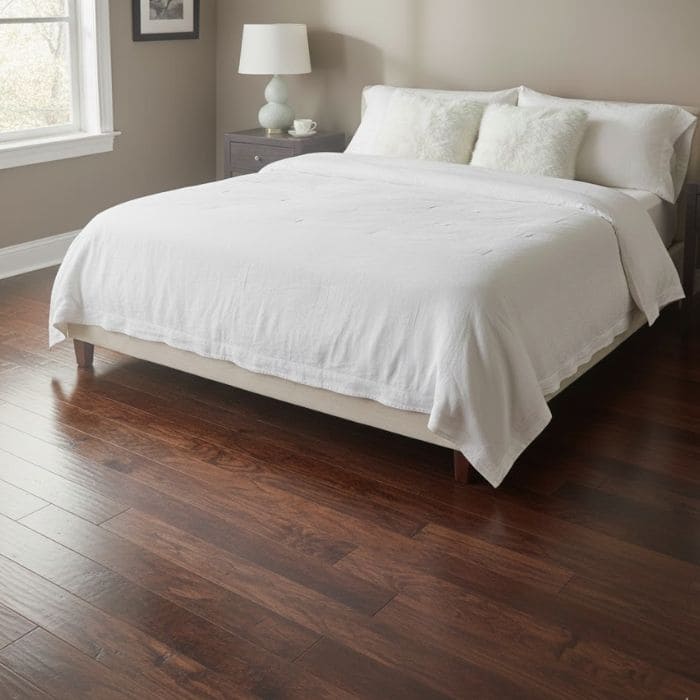
In my bedroom, I already have wood floors underneath the rug, and part of the reason I’m ready to switch back is that the wood is still beautiful, it just needs attention.
The plan is to pull the rug, let the floor fully breathe for a couple of days, and then evaluate what the wood looks like in natural light, because stain choices only make sense when you see your floor honestly.
I’m leaning toward a warm stain, not too orange, not too dark, something that looks calm in morning light and still feels cozy at night, because bedrooms need softness even when the floor is bare.
I’m also thinking about finish, because ultra-glossy floors show every footprint and every speck, and I don’t want my bedroom to become a room I’m constantly policing, so a softer sheen makes more sense for how I actually live.
Here’s my best practical tip: before you commit to a stain tone, test it in at least two spots on the floor and look at it at three different times of day, because a stain that looks perfect at noon can look completely different in the warmer light of evening, and it’s the evening tone you will live with most.
The Small Comforts I’m Keeping Without the Big Rug
I’m not pretending wood floors solve everything. They can feel colder in winter, and they can be louder, and the bedroom should still feel comfortable.
So I’m keeping softness in a more controlled way, with smaller rugs that are easier to clean and easier to lift, like a washable runner beside the bed or a smaller area rug under a chair, the kind of pieces you can shake out, wash, and replace without turning it into a major project.
I’m also adding felt pads where needed, because that tiny detail keeps furniture from scraping and makes the room feel quieter without needing a giant rug to absorb sound.