I think every home collects spices the way it collects spare phone chargers, quietly and over time, until one day you open a cabinet and realize you have three versions of paprika, a half-empty bag of cumin you forgot existed, and something labeled Italian blend that has been clinging to the back corner since a different era of your cooking life.
I reached that moment recently, and because I’ve been trying to make my home feel calmer and more intentional, I decided to stop pretending my spice situation was fine.
I have more than twenty spices, and that count does not even include the random seasoning packets that show up from takeout or the little blends friends gift you around the holidays.
Twenty is not outrageous, but it is enough that if they are not organized, cooking becomes a scavenger hunt, and I cook more when my kitchen feels easy, so I knew I needed a better system.
The funny part is that the solution ended up being simpler than I expected.
Why I Chose Large Jars Instead of Small Spice Bottles
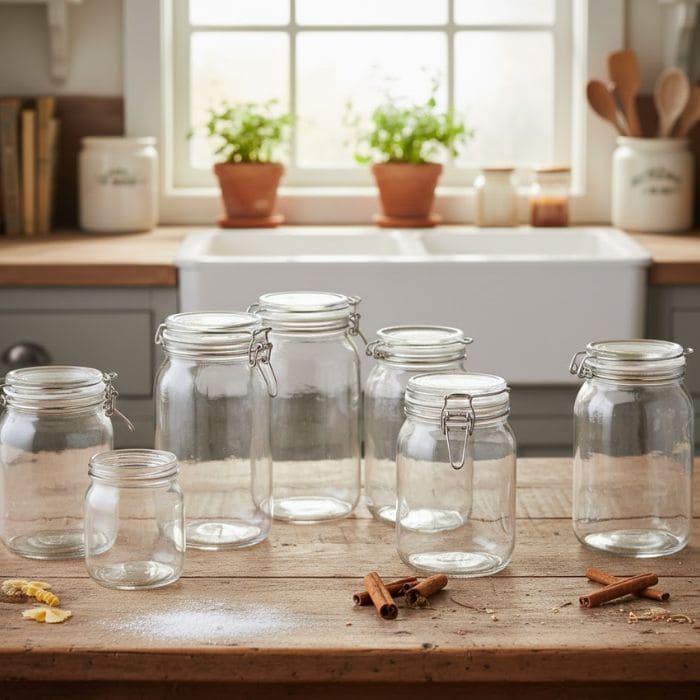
My priority was using large jars, around 24 ounces, because I buy a lot of spices in bags, especially the ones I use constantly, like cinnamon, garlic powder, chili flakes, and cumin.
The problem with small jars is that you pour half the bag in, then the rest sits in a crumpled package, and suddenly you have two containers for one spice, which is how a tidy system becomes messy again.
A 24 oz jar solves that for most spices because it gives the spice room to breathe, keeps the package out of sight, and makes refilling simple.
I also like that the jars look uniform, because uniform containers automatically make a drawer look calmer, even if the contents are a little chaotic.
The Habit That Changed Everything: Transfer Spices Immediately After Shopping
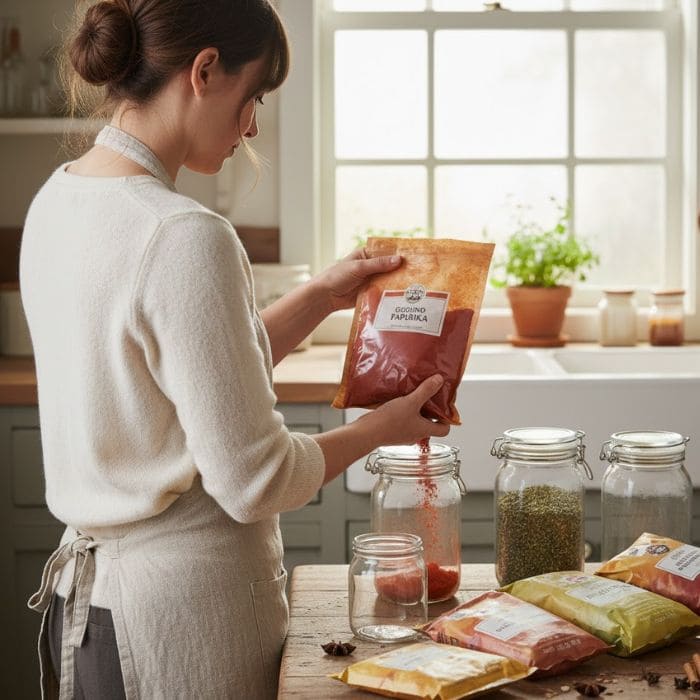
If you buy spices and toss the bag into a cabinet for now, the system breaks before it begins. So I made one rule for myself: when I come home from shopping, I transfer spices right away.
I do it before I put away the rest of the groceries, because once I start cooking or cleaning, I will tell myself I’ll do it later, and later is how spice bags multiply.
I cut the spice package open neatly, pour the spice into the jar using a small funnel or even a folded piece of paper, then I seal the jar and toss the original packaging immediately.
If the bag has useful information like an expiration date, I cut that small corner off and tape it to the bottom of the jar, because I still like knowing that detail without keeping the whole ugly bag.
My Labeling Trick: Brush Pen Names That Look Clean and Stay Legible
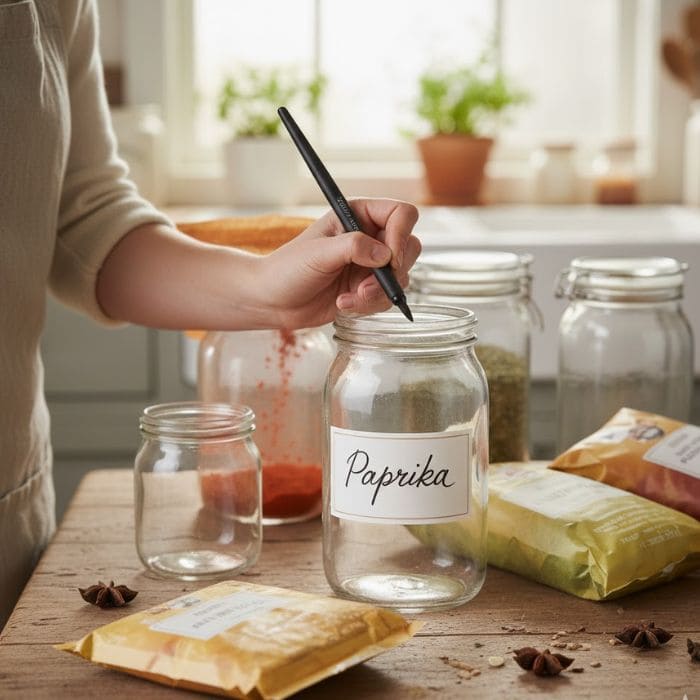
This is the part I enjoy more than I should, because labeling is when the system starts feeling real.
Instead of using a thick marker that bleeds, I use a brush pen to write the spice name. Brush pens make labels look cleaner and more intentional, even if your handwriting is not perfect, because the strokes naturally look styled.
I keep the labels consistent by doing three things:
- I write in the same spot on every jar, near the top front so it is visible when the jars are lying in a drawer.
- I use short, clear names, like “Cumin,” “Paprika,” or “Chili Flakes,” because long names clutter the label.
- I label the jar before it goes into the drawer, because unlabeled jars are how mistakes happen, and cinnamon does not always look different from nutmeg in a hurry.
If you want it even cleaner, you can use label tape or pre-made labels, but honestly, the brush pen has become my little signature, and it makes the drawer look like I meant to organize it, not like I panicked one afternoon and threw everything in jars.
The Final Step: One Dedicated Drawer to Hide Them All
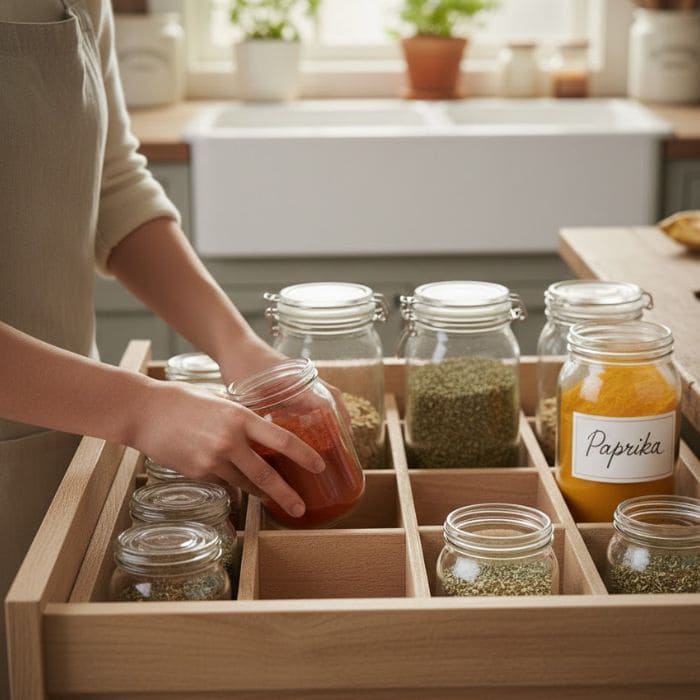
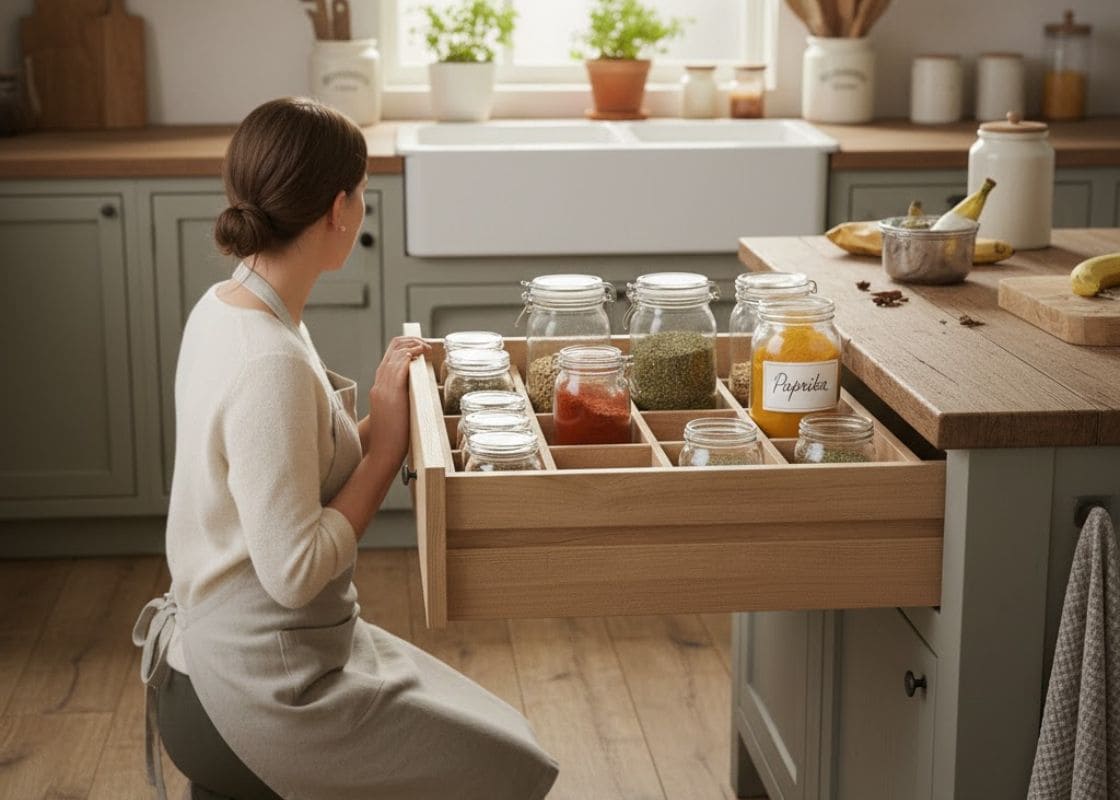
After jars and labels, I gave my spices their own drawer, because spices in a cabinet tend to become a stacked, forgotten mess, and spices on a countertop look cluttered quickly, especially in a kitchen where you are trying to keep the surfaces calm.
A drawer is perfect because you can see everything at once, you can grab what you need without moving bottles around, and you can keep the kitchen looking clean because the spices are hidden until you actually need them.
I arrange mine so the most used spices sit closest to the front, and the special occasion spices sit toward the back, like cloves and cardamom, the ones I love but do not reach for every day.
A Few Extra Tips That Keep the System Working
I learned a few small things that made this system last instead of becoming another short-lived organizing attempt.
I keep a tiny measuring spoon set inside the drawer, because it saves time and prevents me from hunting through other drawers mid-cooking.
I wipe jar rims occasionally, especially for powders like turmeric and cinnamon, because clean rims keep the drawer from looking dusty.
I avoid overfilling jars, because overfilled jars spill easily and make the whole drawer look messy fast.
Other Ways to Organize Spices if a Drawer Isn’t an Option
If you do not have a spare drawer, there are still a few systems that work well without making your kitchen look busy.
A two-tier lazy Susan inside a cabinet keeps spices visible without stacking.
A wall-mounted spice rack can be beautiful if your kitchen style is more open and decorative.
A clear bin system in a pantry works if you prefer grouped categories, like baking spices, savory spices, and spicy heat.
But for me, the drawer is the sweet spot, because it keeps my kitchen looking calm while making cooking easier.