Side tables are not the dramatic part of decorating, which is probably why most people underestimate them, but in my house they’re the kind of furniture that quietly keeps everything from feeling slightly annoying all day long.
I used to think a side table was something you bought when a room was already finished, almost like a decorative accessory, and then I lived long enough in a real home to realize the opposite is true.
A side table is the difference between a room that looks nice and a room that actually works, because it gives your hands a place to land and it gives your daily habits a home.
Side Table #1: The One Beside My Sofa That Keeps My Evenings Calm
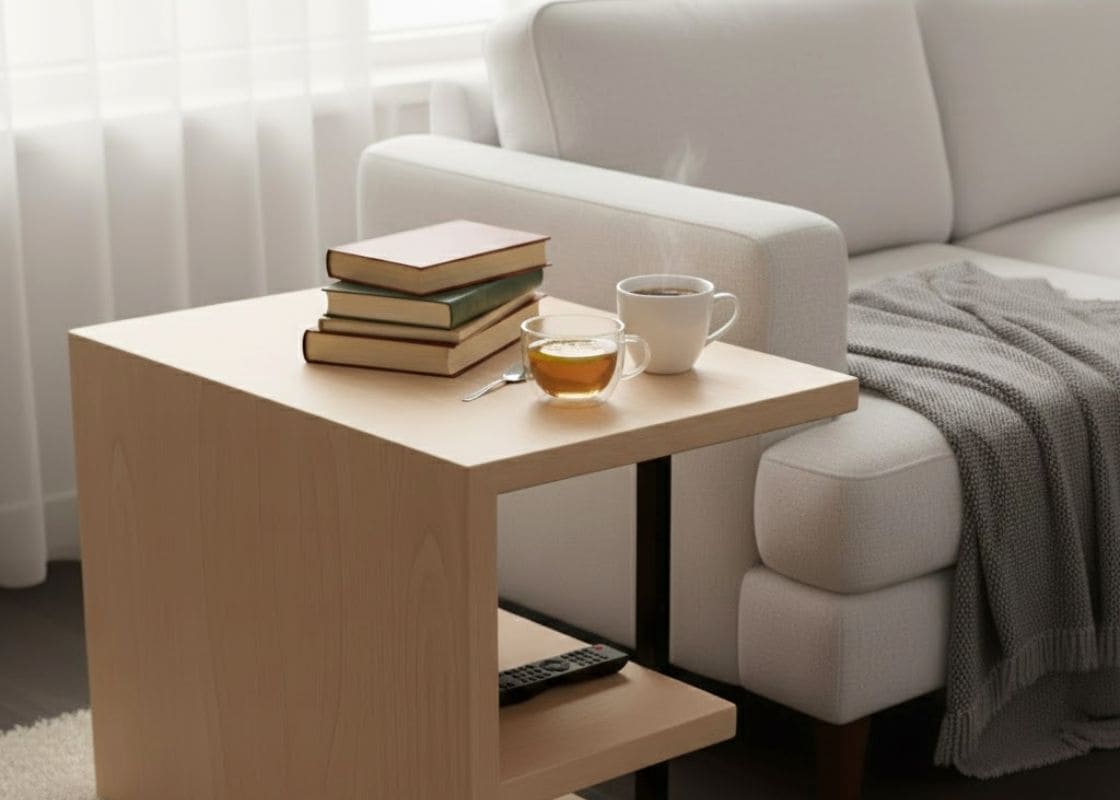
The living room side table came into my life because I got tired of doing that thing where you set a mug down on whatever surface is closest and then spend the rest of the evening being careful not to knock it over.
For a while, I was using the arm of the sofa as a coaster, and I’m almost embarrassed to admit how long I lived like that, because it’s one of those tiny daily frustrations that chips away at your peace without you realizing it.
I remember the exact night I decided I was done with that. It was late, the living room was softly lit, I had a warm drink, my dog had curled up in his usual spot like a sleepy guard, and I tried to reach for the remote while balancing my mug, and the mug tipped just enough to make my heart jump.
Nothing spilled, but my nervous system did that little jolt, and I thought, I am not doing this anymore. I don’t want a home that keeps me slightly tense over small things.
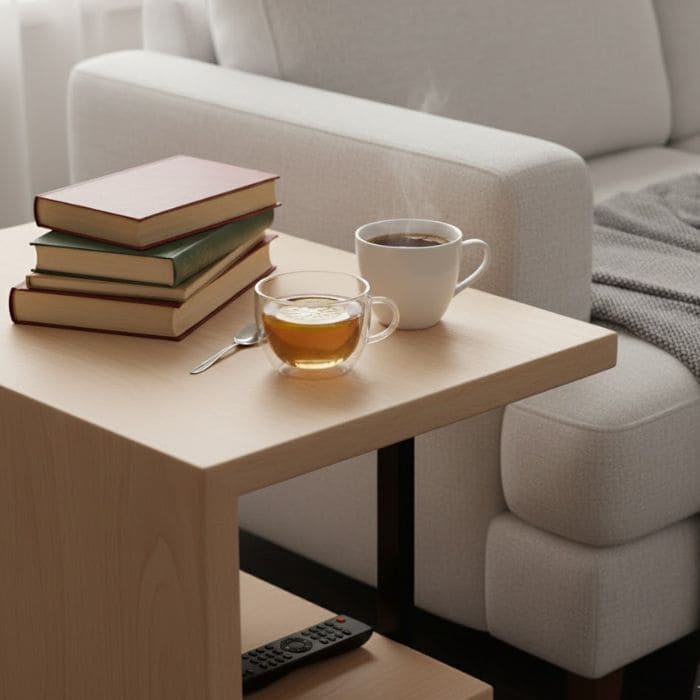
So I found a side table that was the right height for the sofa, sturdy enough that it didn’t wobble, and large enough to hold what I actually use without becoming a second coffee table.
The table itself isn’t flashy, which I like, because the goal was never to “decorate,” it was to make the living room feel easier.
Now it holds the real pieces of my evening: the book I’m reading slowly, the mug that warms my hands, the remote that I refuse to lose in the cushions again, and usually a small dish for loose items that would otherwise end up scattered, like a hair tie or my rings when I take them off.
I also keep a coaster there because I don’t want water rings, but I’ll admit it’s less about protecting the table and more about protecting my mood, because cleaning up little messes always feels louder than it should.
The simple rule that keeps it from turning into clutter
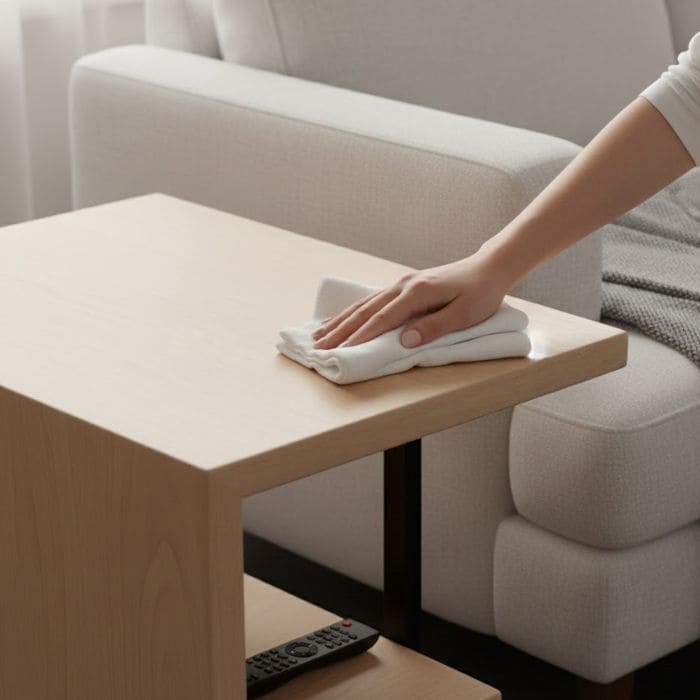
I keep the surface honest. That means only the things I genuinely use stay on it, and everything else gets moved along, because side tables have a sneaky habit of becoming a dumping ground if you let them.
I allow one decorative item at most, usually something that adds warmth like a small candle or a tiny vase, but I don’t pile on accessories, because if my side table starts feeling busy, I stop using it the way it’s meant to be used.
Side Table #2: The Porch Stump That Turned My Mornings Into a Ritual
The porch table is the one that makes visitors smile, because it doesn’t look like it came from a furniture store. It’s a large wooden stump, and I love that it feels both practical and slightly unexpected, like a small piece of nature decided to become furniture.
I found it at a time when I was trying to make my porch feel more like a place I could actually enjoy, instead of a space I passed through on the way to somewhere else.
My porch isn’t huge, but it’s enough for a chair and a few flower pots, and in spring and early fall it’s the best part of the house in the morning.
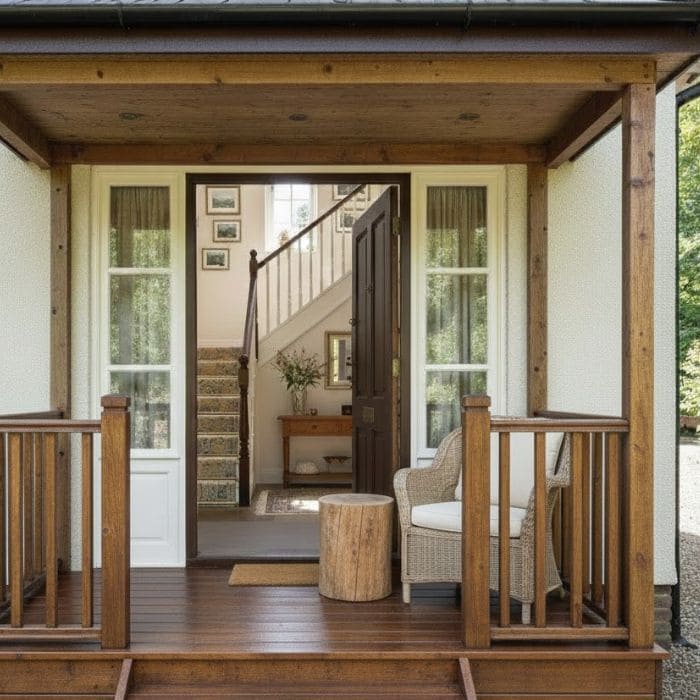
One day I came across this stump, thick and heavy with a flat top, and I had that instant thought that feels a little ridiculous but also very clear: that could be a table.
It was the kind of piece you can’t really tip over, which matters when you have a dog who thinks every part of the home is a pathway, and it also felt right for my house, because I like things that feel grounded and a little imperfect.
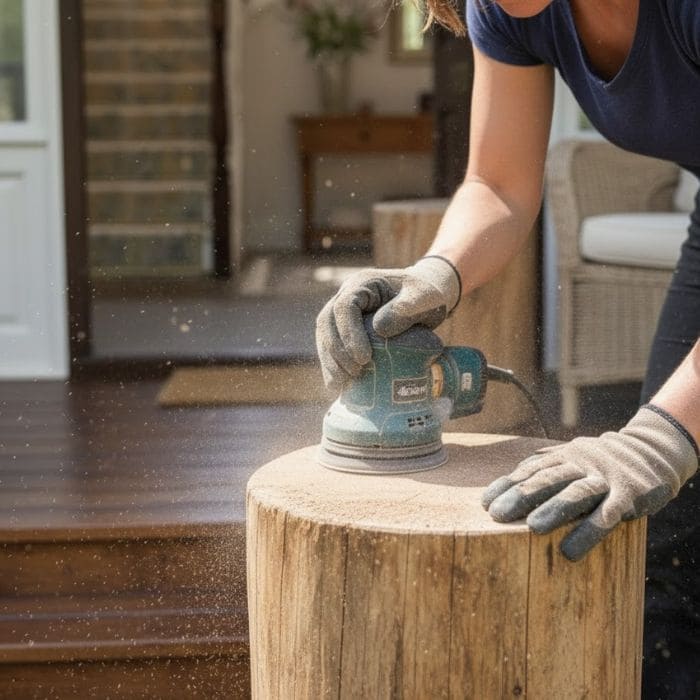
I did a few small things to make it truly usable. I sanded the top just enough so it wouldn’t snag sleeves or feel rough under a mug, and I sealed it so damp mornings wouldn’t soak into it too easily.
I didn’t make it glossy or perfect, because I wanted it to still look like wood, but I did want it to handle real life without getting ruined immediately.
Now it sits beside my porch chair, close enough that I can set a mug down without leaning forward awkwardly, and that one detail changed how I use the porch entirely.
In the morning, I take my coffee out, my dog follows me like it’s our shared tradition, and I settle into the chair with that calm feeling you only get when you’re outside early and the neighborhood hasn’t fully woken up yet.
The stump holds my mug, sometimes a small plate if I’ve brought out something simple like a slice of toast or an apple, and occasionally my phone if I’m playing music quietly, which I do on mornings when I need the house to feel a little less silent.
Sometimes I’ll set a small pot of greenery on the stump too, not because it needs decorating, but because living things make the porch feel loved. The stump has become the kind of table that doesn’t just hold objects, it holds a mood, which is exactly what I wanted from that space.
Tips If You Want a Side Table That Actually Helps You
If you’re choosing a side table, height matters more than style, because if it’s too low you’ll never use it, and if it’s too tall you’ll keep knocking things over.
I also think stability is non-negotiable, especially if you live with pets, because a wobbly table will make you tense without you even noticing.
For unconventional tables like stumps, the key is making the surface smooth and sealing it so it can handle moisture, then placing it intentionally so it feels like furniture, not a random object that wandered into your space.