Most of the time when we finish eating a banana, the peel goes straight into the trash without a second thought. For years I did the same thing.
Bananas are convenient, healthy, and easy to grab as a quick snack, but the peel usually seemed like useless waste.
Not long ago I started learning that banana peels actually have many practical uses around the home.
The inside of the peel contains natural oils, potassium, and gentle cleaning compounds that can help polish, brighten, and remove certain types of dirt.
At first I was skeptical, but after trying a few of these methods myself, I was surprised by how well some of them worked.
Banana peels obviously will not replace every cleaning product in the house, but they can be a helpful and natural option for several small cleaning tasks.
1. Polishing Silverware
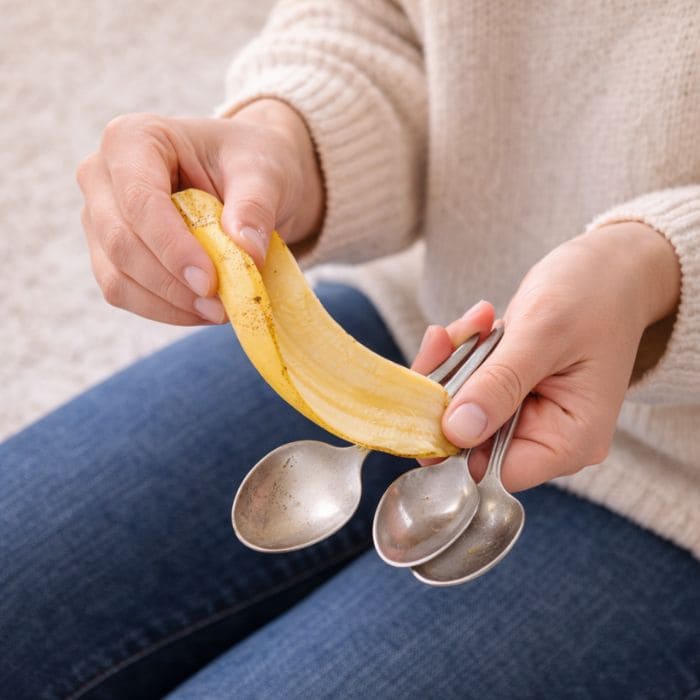
One of the most interesting uses for banana peels is polishing silver items.
Over time silver spoons, forks, and small decorative pieces can develop a dull surface or light tarnish.
Instead of using strong chemical polish, the inside of a banana peel can gently clean the metal.
I take a piece of the peel and rub the soft inner side across the silver surface.
The natural oils help lift tarnish and restore some shine. After rubbing, I wipe the item with a soft cloth to remove any residue.
It works particularly well for lightly tarnished silverware or small decorative objects.
2. Shining Leather Shoes
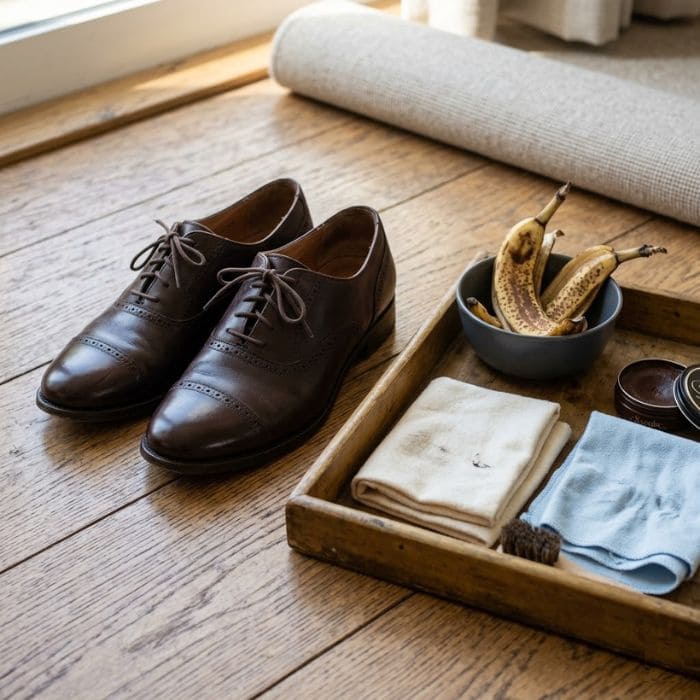
The inner part of the peel contains natural oils that condition leather surfaces.
When I want a quick shine, I rub the inside of the peel gently across the shoe.
After covering the surface, I wipe the shoe with a clean cloth or paper towel.
The result is a softer shine that looks surprisingly similar to a light polish. This trick works best for smooth leather shoes rather than suede.
3. Cleaning Plant Leaves
If you have indoor plants, banana peels can be useful here as well.
Plant leaves often collect dust, which makes them look dull and blocks sunlight from reaching the surface.
The inside of a banana peel can remove that dust while adding a soft natural shine.
I gently wipe the leaves using the inner side of the peel, moving slowly from the base of the leaf toward the tip.
Afterward, I use a dry cloth to remove any leftover moisture.
This method works especially well for plants with large leaves like monstera, rubber plants, or peace lilies.
4. Polishing Wooden Furniture
Wood furniture sometimes looks dry or slightly dull after a while. The natural oils in banana peels can give the surface a gentle polish.
To try this, I rub the inner part of the peel lightly across the wooden surface, especially on small areas like table edges or chair arms.
Then I buff the area with a soft microfiber cloth. The wood usually looks a bit richer and smoother afterward.
Of course, this method is better for small furniture pieces rather than large surfaces.
5. Cleaning Stainless Steel Surfaces
Banana peels can also help clean stainless steel surfaces like faucets or kitchen appliances.
Fingerprints and water spots often show clearly on stainless steel. When I rub the inside of a banana peel across the metal surface, it helps loosen light stains.
Afterward I wipe the surface with a cloth to remove residue and polish the metal.
The result is a smoother surface with fewer visible marks.
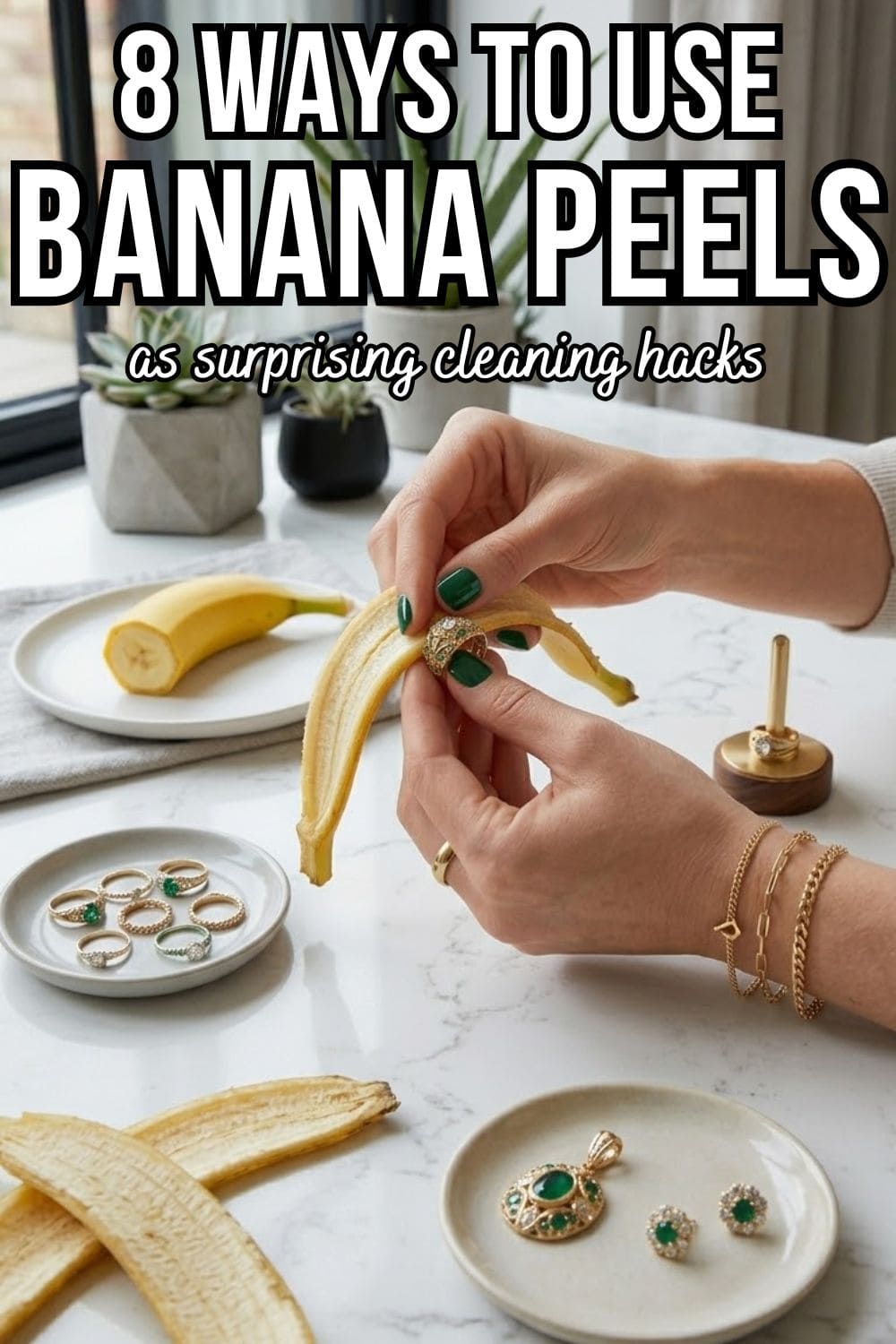
6. Brightening Jewelry
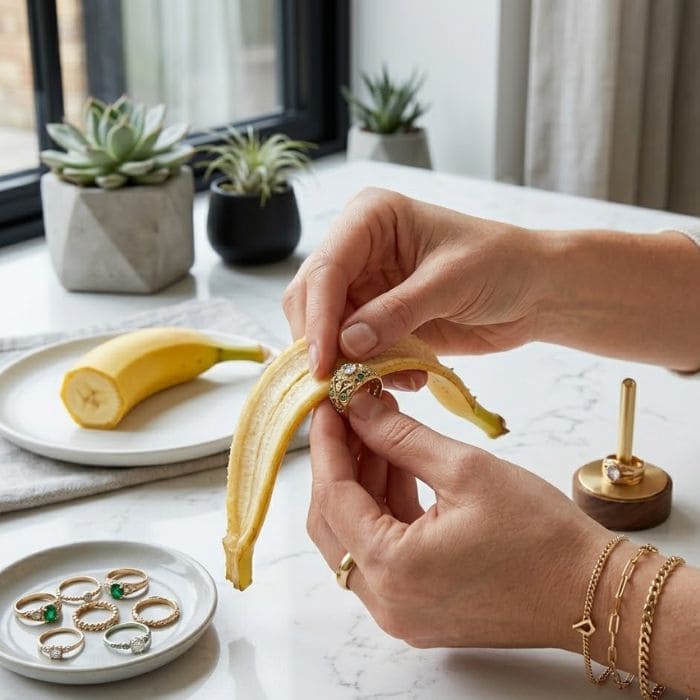
Some types of jewelry, especially silver jewelry, can benefit from a quick wipe with banana peel.
I gently rub the inside of the peel over rings or bracelets, then wipe them clean with a soft cloth.
The mild oils help remove dullness and bring back a bit of shine without scratching the surface.
However, this method should not be used on delicate gemstones that may react to moisture.
7. Removing Light Scuff Marks
Banana peels can also help remove light scuff marks from certain surfaces.
For example, small marks on leather bags, shoes, or even some furniture surfaces sometimes respond well to gentle rubbing with the inner peel.
The oils soften the mark and help lift it from the material. After rubbing, wiping with a cloth usually finishes the job.
Note: This trick works best for mild scuffs rather than deep scratches.
8. Cleaning Glass with a Quick Polish
Some people even use banana peels to polish glass surfaces.
The peel can help remove light smudges on mirrors or glass tables. After rubbing the surface with the peel, I immediately wipe it with a dry microfiber cloth.
The cloth removes residue while leaving the glass clearer.
Although it will not replace proper glass cleaner, it works surprisingly well for quick touch-ups.
A Few Helpful Tips When Using Banana Peels
If you want to try these methods, a few simple tips can make the process easier.
First, use fresh banana peels rather than ones that have already started drying out. Fresh peels contain more natural oils and work better.
Second, always wipe surfaces with a cloth after using the peel. This removes any remaining residue and leaves a cleaner finish.
Finally, it is always a good idea to test the peel on a small hidden area before applying it to a larger surface.
A Simple Way to Reduce Kitchen Waste
Banana peels are usually treated as kitchen waste, but they can actually serve several small purposes before being thrown away.
Using them for quick cleaning tasks is a simple way to reduce waste while trying something natural and inexpensive.
It may not replace every cleaning product in the house, but it is always interesting to discover how everyday items can have unexpected uses.
See also: 10 Viral Social Cleaning Hacks in 2025
Do You Use Banana Peels For Other Purposes?