Last winter in Boston was the kind of weather that makes the whole city feel tighter, as if everyone is moving faster just to get inside again. I remember a stretch of days when I kept putting off errands, thinking I’d run out later, and then suddenly later didn’t feel so simple, because the cold made even small trips feel like chores you had to negotiate with your own body.
I didn’t expect it to become difficult to buy something as basic as peppers, but there were days when the shelves looked picked over, and the produce I did find felt tired and expensive, like it had traveled too far just to arrive half-wilted.
In cold weather, I always want hot, spicy dishes. It is not even a preference as much as it is a small survival instinct in me, because spice turns an ordinary meal into something that warms you from the inside.
Still, that winter, I couldn’t reliably get fresh peppers when I wanted them, and I found myself making the same bland fallback meals, which made the kitchen feel less like comfort and more like routine.
Then one of my readers sent me a message with a simple suggestion: “Hang your peppers. Dry them. You’ll have your own winter stash.”
Why Hanging Peppers Works So Well for Winter Cooking
What I like most about dried peppers is that they turn “I have nothing in the house” into “I can still make something good.”
You can crumble them into soup, simmer them into sauces, grind them into flakes, or toss a piece into a pot of beans and let it do its slow magic. Dried peppers are also one of those ingredients that makes a kitchen feel prepared without being fussy, because you are not relying on last-minute shopping to get flavor.
There is also a tradition element that I didn’t expect to enjoy as much as I do. In New Mexico, people string red chiles into colorful arrangements called ristras and dry them for storage and winter cooking, and they are also seen as a welcoming symbol, which I find oddly comforting in a kitchen that sometimes feels too quiet.
I do not live in New Mexico, and my kitchen is not a Southwestern postcard, but I love the idea that something practical can also feel like hospitality.
The Peppers That Dry Best
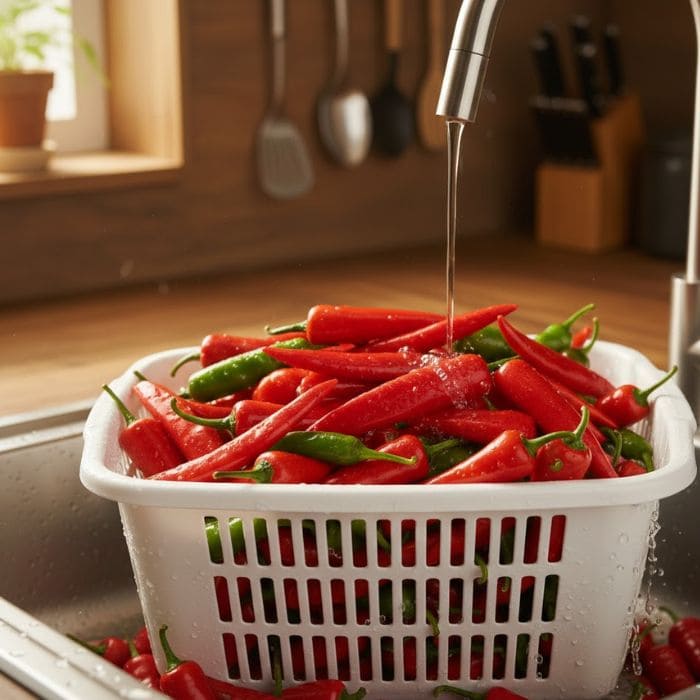
In general, smaller peppers with thinner walls dry more reliably on a string, because moisture can leave the pepper faster without getting trapped inside.
I usually reach for peppers like cayenne, Thai chiles, chile de árbol, or small serranos for hanging.
Thick-walled peppers can still be dried, but they often do better sliced on racks or dried with a dehydrator, because the thicker flesh holds moisture longer.
I also choose peppers that are mature and firm, ideally fully colored, and not bruised or soft, because any damage is a starting point for spoilage during a slow drying process.
What I Used
I used a heavy thread or strong kitchen string, a large needle, scissors, and a clean hook or rod in my kitchen that stays out of the way of steam.
I also keep a pair of disposable gloves nearby, because hot peppers can irritate your skin and it is far too easy to touch your eye without thinking.
My Exact Method for Hanging Peppers in the Kitchen
1) I prep the peppers so they dry instead of spoiling
I rinse the peppers, then dry them very thoroughly with a towel, because you do not want surface water clinging to them when they go onto the string. If I have time, I let them sit out for a bit so they are fully dry before I start threading.
For small hot peppers, I follow a tip used in extension guidance: I make a small slit near the stem area to help moisture escape during air drying, which is especially helpful in places where humidity can slow the process down.
2) I string them through the stems
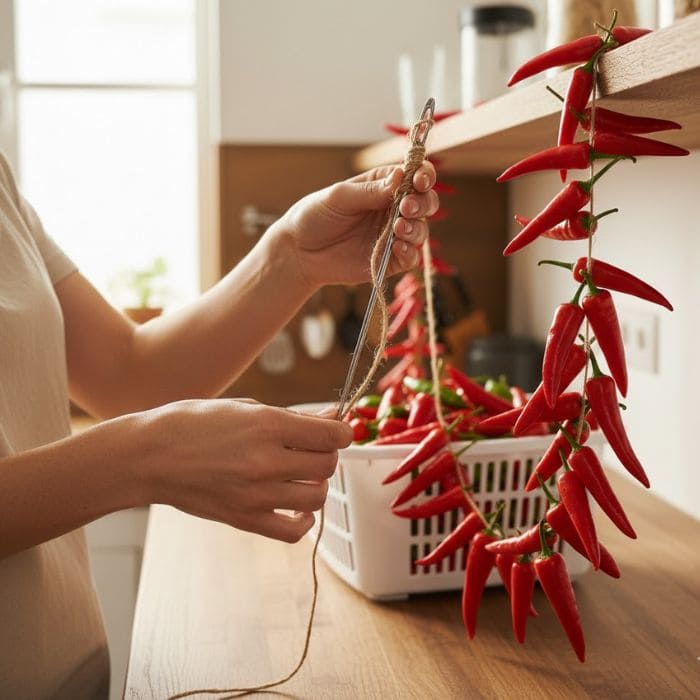
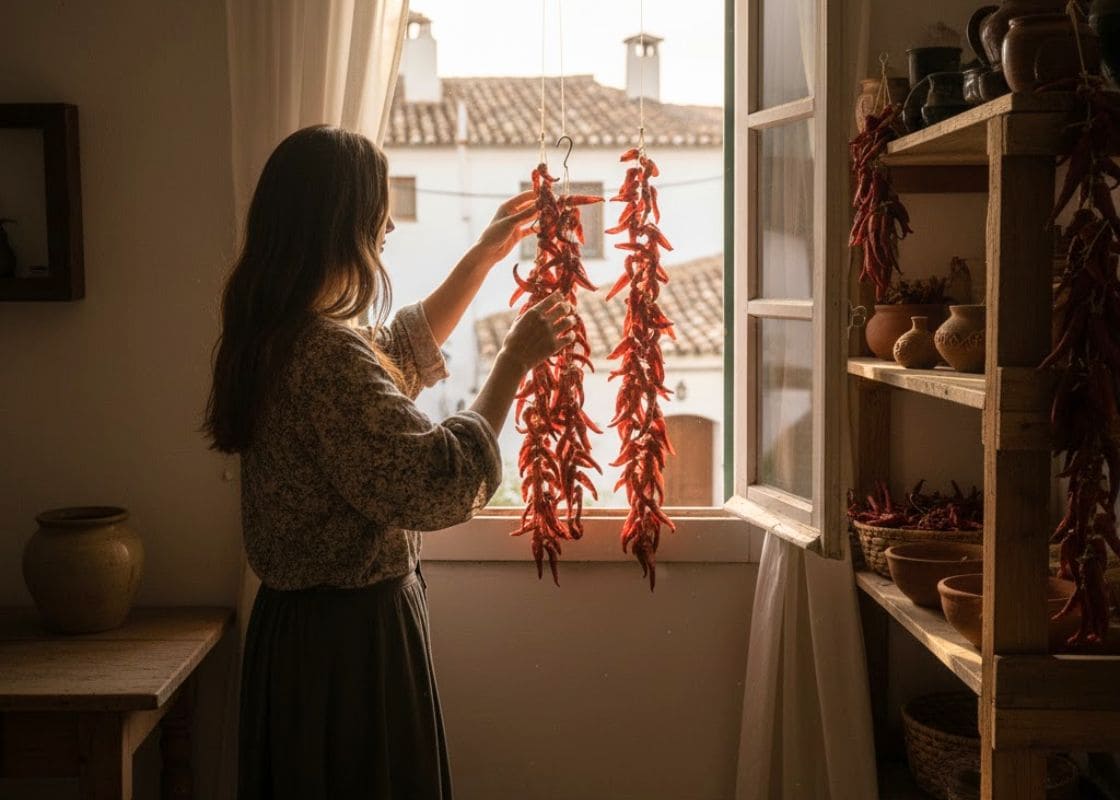
I thread a large needle with heavy string, then run it through the stems of the peppers so the pepper hangs naturally without tearing through the flesh.
Extension instructions describe using a large needle and heavy thread through the stems, then hanging the strings in a room where air circulates freely.
I space the peppers a little so they are not pressed tightly against each other, because airflow matters more than people expect, and peppers packed too closely dry unevenly.
3) I choose a drying spot with airflow, not steam
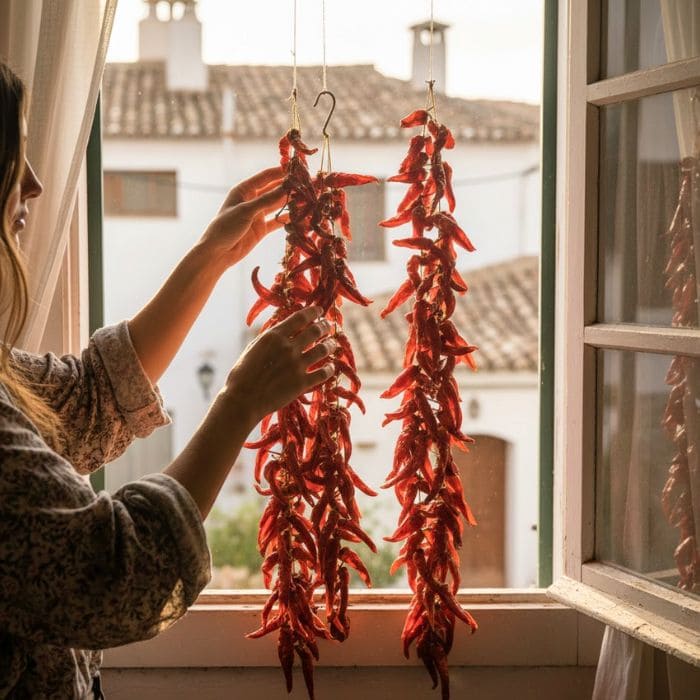
This part is what makes a kitchen setup succeed. I hang my pepper string in a spot that stays dry and ventilated, away from the stove, kettle steam, dishwasher heat, or anything that adds moisture to the air.
Indoor air drying works best in a well-ventilated room, and high humidity can cause peppers to spoil before they dry, so I treat good airflow as the whole project, not just a nice bonus.
If your kitchen tends to get humid, a nearby doorway, a pantry with airflow, a screened porch, or a spare room can be better than hanging them right next to cooking steam.
4) I give them real time, and I check them like I’m keeping an eye on bread dough
Air drying is slow, and that slowness is normal. Extension guidance notes that strings of peppers may take around 3 to 4 weeks to dry, and that is exactly why airflow and low humidity matter so much.
Every couple of days I check for soft spots, weird smells, or any sign of mold. If one pepper looks questionable, I remove it right away, because one spoiled pepper can affect the ones beside it.
5) I only store them when they are fully dry
A pepper that is truly dry will feel lightweight and leathery, and often brittle, especially at the tip. If I bend it and it still feels pliable like fresh produce, I give it more time, because storing peppers with hidden moisture is how you end up with mold later.
Once they feel fully dry, I remove them from the string and store them in airtight glass jars in a cool, dry place, because jars keep them clean, keep the kitchen looking calm, and make it easy to grab a pinch without hunting.
How I Use Dried Peppers All Winter
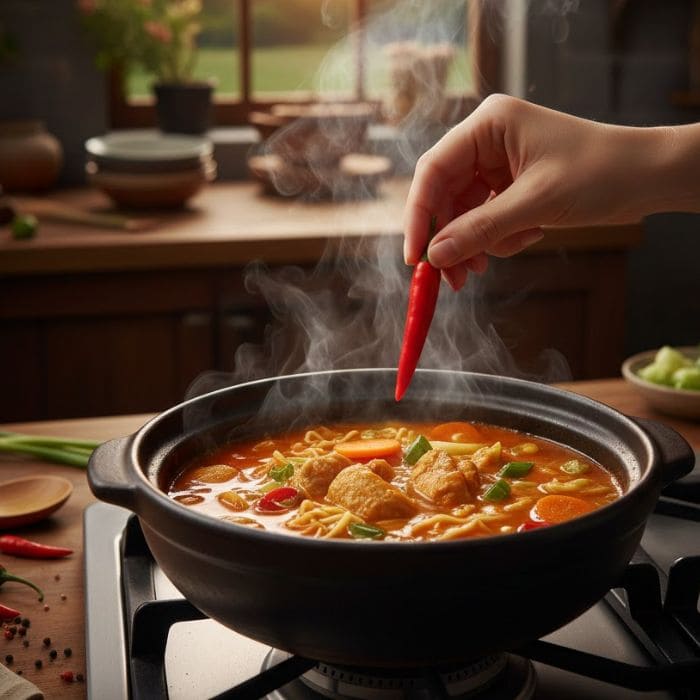
Some nights I crumble a dried pepper straight into soup or chili and let it soften while it cooks. Other times I simmer a few peppers into a pot of beans for slow heat that feels deeper and less sharp.
When I want something quick, I shake a dried pepper in a blender or spice grinder to make flakes, and I keep a small jar near my stove like a personal “winter heat” blend.
If you do grind peppers, gloves and good ventilation are worth it, because pepper dust is enthusiastic, and it does not care about your sinuses.